
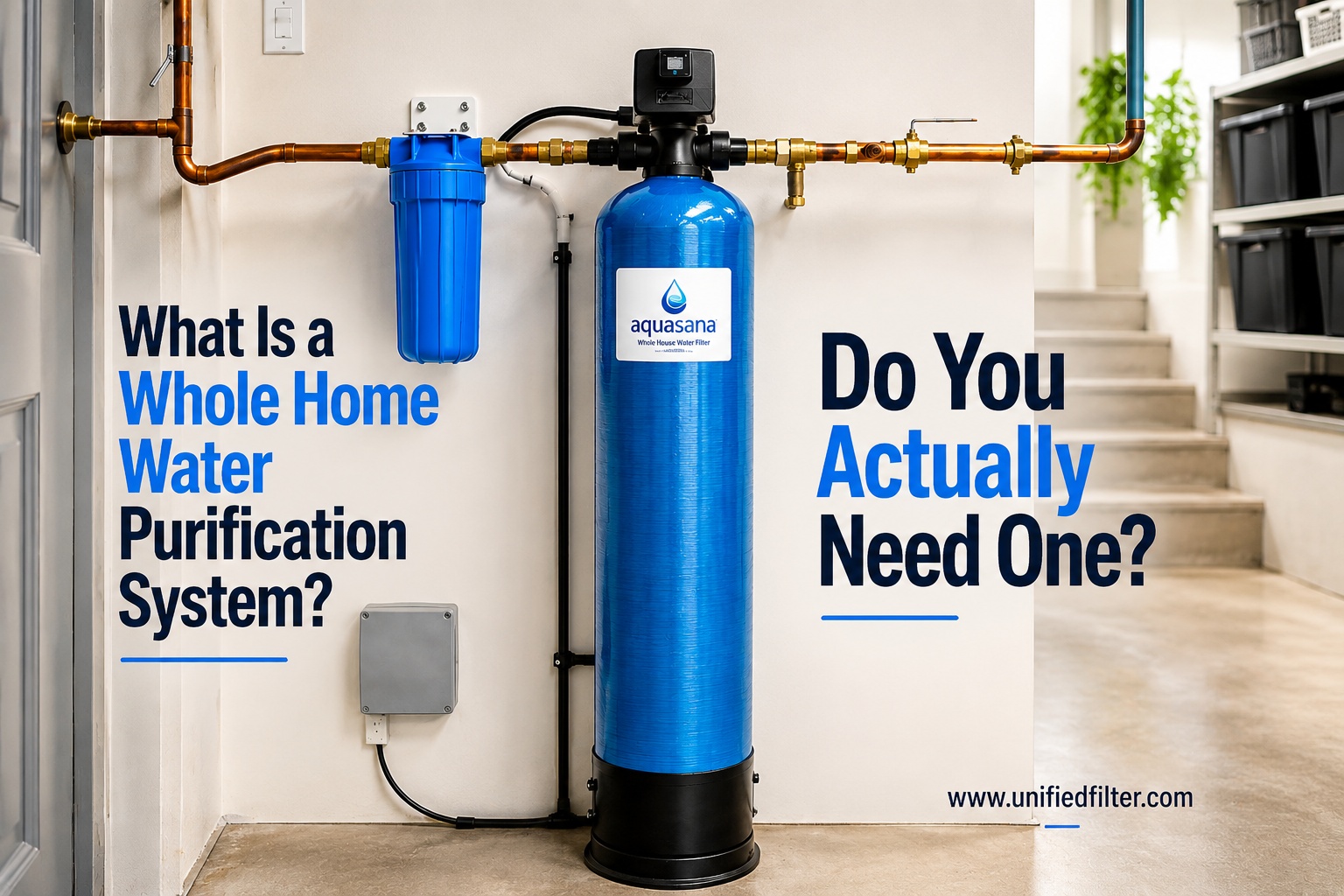

Most city water households do not need whole home water purification systems. A fridge filter plus an under sink filter covers drinking and cooking water at a fraction of the cost. Whole house systems make genuine sense for well water households, homes near PFAS contamination, or people with skin and hair sensitivity to chlorinated water throughout the house.
A whole home water purification system is a big decision. We are talking $800 to $3,000 upfront, professional installation, and ongoing maintenance. Before you spend that money, this guide will tell you whether you actually need one, which type makes sense for your situation, and how the top brands compare.
What Is a Whole Home Water Purification System?
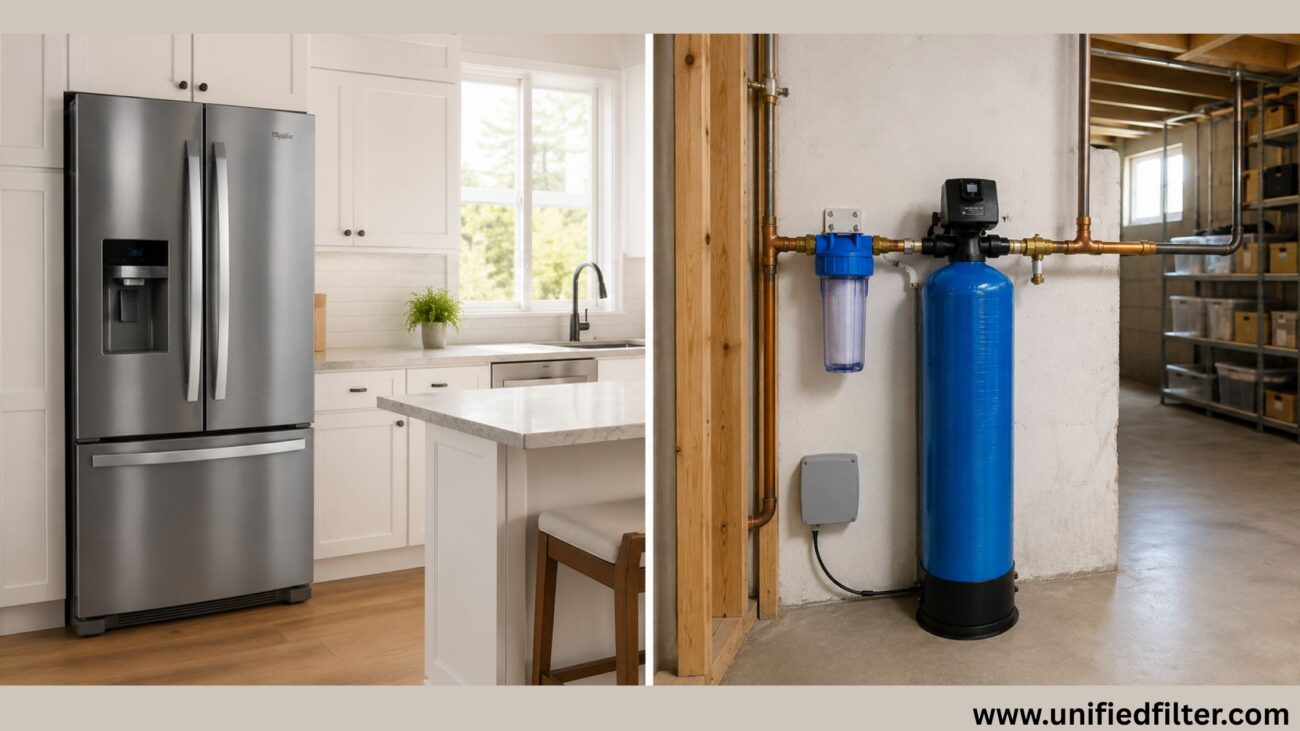
A whole home water purification system, also called a point-of-entry (POE) system, is installed on the main water line entering your house. Every tap, shower, washing machine, and appliance gets filtered water. Compare that to a fridge filter or under sink filter, which only treats water at one specific point.
The appeal is obvious. One system, every tap. But that convenience comes with real trade-offs cost, installation complexity, and ongoing maintenance. Understanding those trade-offs is what this guide is for.
Point of entry vs point of use | What is the difference?
Point of entry (POE): Whole house systems. Filter installed at the main water line. Every tap in the home gets filtered water, showers, sinks, appliances, everything.
Point of use (POU): Fridge filters, under sink filters, countertop units. Filter installed at one specific tap or appliance. Only water at that point gets filtered.
For most households, POU systems cover what actually matters: drinking water and cooking water. POE systems add shower and appliance filtration, which only certain households genuinely need.
Do You Actually Need a Whole Home Water Purification System?
This is the honest question most buying guides skip. Here is a straightforward answer:
| Situation | Need Whole House? | Better Alternative |
| Well water with bacteria or iron | Yes, strongly recommended | |
| Confirmed PFAS contamination | Yes, NSF P473 certified system | |
| Skin/hair sensitivity to chlorine | Yes — shower filtration benefit | |
| City water, chlorine taste only | Probably not | Fridge filter + under sink |
| Lead concern from pipes | Not necessary | NSF 53 certified fridge/under sink filter |
| Renter, no modifications allowed | No | Countertop or fridge filter |
| Old home, lead pipes | Consider it | Point-of-use NSF 53 certified filters first |
The EPA sets maximum contaminant levels for municipal water supplies, which means city water meets basic safety standards before it reaches your home. The main risks are lead from your household pipes (not the water supply itself) and chlorine taste and odor from treatment. Both are handled far more affordably by point-of-use filters than whole house systems.
Check your local water quality report, utilities are required to publish annual Consumer Confidence Reports. If your area has documented PFAS or other contamination, a whole house system becomes a much stronger recommendation.
Types of Whole Home Water Purification Systems Explained
Not all whole home water purification systems work the same way. The right type depends on what is in your water.
| System Type | How It Works | Best For | Upfront Cost |
| Tank-based carbon | Large GAC media bed, water flows through continuously | High usage families, city water | $800 – $1,500 |
| Cartridge system | Replaceable carbon cartridges | Small households, part-time homes | $200 – $600 |
| Carbon + KDF media | Carbon + copper-zinc media for heavy metals | City water, chloramine areas | $900 – $2,000 |
| Carbon + UV combo | Carbon filtration + UV sterilization | Well water with bacteria concerns | $1,200 – $3,000 |
| Whole house RO | RO membrane at point of entry | Extreme contamination, PFAS areas | $3,000 – $8,000+ |
For most city water households: a tank-based carbon or carbon + KDF system is the right call. These remove chlorine, chloramines, VOCs, and many industrial chemicals without wasting water or requiring electricity. The SpringWell CF1 uses catalytic carbon and is tested at total THMs of non-detect after 3+ years of use in independent lab testing.
For well water: you need to test your water first. Iron, manganese, hydrogen sulfide, bacteria, and nitrates are common well water problems and different systems handle each differently. A UV stage is essential if bacteria is present. A whole house RO is only necessary for extreme TDS or specific contamination.
Top Whole Home Water Purification System Brands Compared
Here is an honest look at the leading whole home water purification system brands in the US right now based on independent lab testing, certification data, and real user feedback:
| Brand | Best System | NSF Certified | Price Range | Best For | Website |
| SpringWell | CF1 (carbon) | Yes | $800-$1,100 | City water | springwellwater.com |
| Aquasana | OptimH2O | PFAS certified | $1,000-$1,500 | PFAS removal | aquasana.com |
| iSpring | WGB32B | Yes | $300-$800 | Budget-friendly | ispringsystems.com |
| Culligan | HF-360 | Yes | $1,500-$3,000+ | Professional install | culligan.com |
| Aquasure | Fortitude Pro | Yes | $400-$900 | Value option | myaquasure.com |
| Pelican Water | PC600 | NSF 42/61 | $900-$1,400 | Salt-free softening | pelicanwater.com |
SpringWell CF1 | Best for city water
The SpringWell CF1 is the most consistently recommended whole house carbon filter for city water households. Independent testing showed it reduced total trihalomethanes from 31.83 ppb to non-detect after 3+ years of use. It uses catalytic carbon and KDF media, has a 12 GPM flow rate, and comes with a lifetime warranty. Upfront cost is $800-$1,100. Annual maintenance is roughly $100-$150 for sediment filter replacements.
Aquasana OptimH2O | Best for PFAS removal
If PFAS is the specific concern, the Aquasana OptimH2O is one of the few whole house systems with NSF P473 and P477 certification for PFAS removal. It combines activated carbon, KDF, and a sub-micron filter. Cost is $1,000-$1,500 with professional installation recommended.
iSpring WGB32B | Best budget option
The iSpring WGB32B is a 3-stage cartridge system that offers solid chlorine, sediment, and basic contaminant removal at a budget price. At $300-$500, it is one of the most affordable whole house options. The trade-off: cartridge systems have higher ongoing filter costs than tank systems for high-usage households.
Culligan | Best for professional service
Culligan is the household name in water treatment, franchise locations in 47 states, professional installation, and long-term service contracts. Their systems cost more than retail alternatives, but the service network is unmatched. If you want someone else to handle maintenance and you are willing to pay for it, Culligan is the right choice.
What Does a Whole Home Water Purification System Actually Cost?
Total cost of ownership matters more than upfront price. Here is an honest breakdown:
- Tank-based system (e.g. SpringWell CF1): $800-$1,100 system + $200-$500 installation + $100-$150/year maintenance. 3-year total: $1,300-$2,050.
- Cartridge system (e.g. iSpring WGB32B): $300-$500 system + $150-$300 installation + $200-$400/year filters. 3-year total: $1,050-$2,000.
- Premium system (e.g. Aquasana OptimH2O): $1,000-$1,500 system + $300-$600 installation + $150-$300/year. 3-year total: $1,750-$3,000.
- Culligan (professional, leased): $50-$100/month service contract. 3-year total: $1,800-$3,600.
- Compare this to a fridge filter + under sink filter combination: $90-$110/year for fridge filter + $80-$150/year for under sink = $170-$260/year total. Over 3 years: $510-$780. Zero installation cost. For city water households, the math rarely favors a whole house system.
Installation and Maintenance
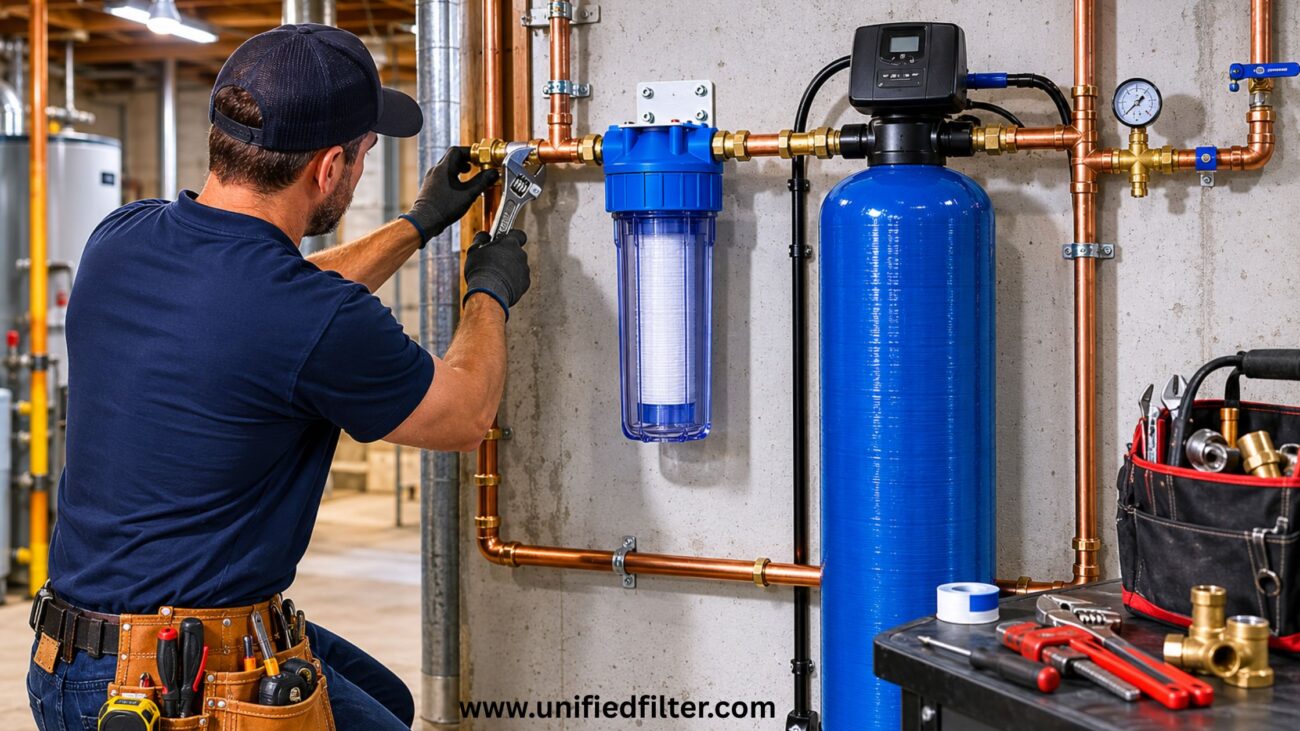
This is where a lot of whole house system buyers get surprised. Installation is not a weekend DIY project for most households. Here is what it actually involves,
- Location: System installs on the main water supply line. Typically in the garage, basement, or utility room, before it branches to the rest of the house. You need a dry, accessible space with at least 12 inches clearance.
- Plumbing: Requires shutting off the main water supply and cutting into the supply line. Basic plumbing skills required for DIY installation. Most homeowners hire a plumber, budget $150-$500 for installation labor.
- Tank systems: Minimal ongoing maintenance, sediment pre-filter replacement every 6-12 months ($20-$50 each). The main carbon media lasts 5-10 years before replacement.
- Cartridge systems: More frequent filter changes, every 3-6 months depending on usage. Higher ongoing cost but simpler to swap yourself.
- UV systems: UV lamp replacement every 12 months. Do not skip this, an expired UV lamp provides no sterilization even if the unit appears to be running.
Before buying, check if your local utility offers rebates for whole house filtration systems, especially in areas with documented water quality issues. Some states offer up to $500 in rebates for certified systems. Check nsf.org for certified product listings.
Already Own a Whirlpool-Family Fridge? Start Here First.
Before investing in a whole home water purification system, check what you already have. If you own a Whirlpool, KitchenAid, Maytag, Amana, Jenn-Air, or Kenmore refrigerator, you have a built-in NSF 42, 53, and 401 certified filtration system covering your drinking water and ice. That handles 24 certified contaminants including lead, chlorine, cysts, pharmaceuticals, and BPA.
For most city water households, that plus an under sink filter for cooking water is all you need at a fraction of the cost of a whole house system.
Frequently Asked Questions
What is a whole home water purification system?
A point-of-entry system installed on your main water line that filters every tap, shower, and appliance in the house.
Do I need a whole home water purification system?
For well water, PFAS contamination, or chlorine sensitivity throughout the house, Yes. For typical city water drinking concerns, a fridge filter plus under sink filter is sufficient and far cheaper.
What is the best whole home water purification system?
For city water, SpringWell CF1. For PFAS removal, Aquasana OptimH2O. For budget, iSpring WGB32B. For professional service, Culligan.
How much does a whole home water purification system cost?
$800-$3,000 upfront plus $150-$500 installation plus $100-$400 per year in maintenance, depending on system type.
How long does a whole home water filter last?
Tank-based carbon media lasts 5-10 years. Cartridge systems need filter changes every 3-6 months. UV lamps require annual replacement.