Water Filter for Microplastics | Which Filters Are Actually Certified to Remove Them

Reverse osmosis filters are the most effective water filter for microplastics, 99%+ removal at 0.0001 micron pore size. For pitchers, LifeStraw Home is the only one certified to NSF-244 specifically for microplastics. Look for NSF/ANSI 401 certification as minimum proof. Standard fridge filters and basic carbon filters are not certified for microplastic removal.
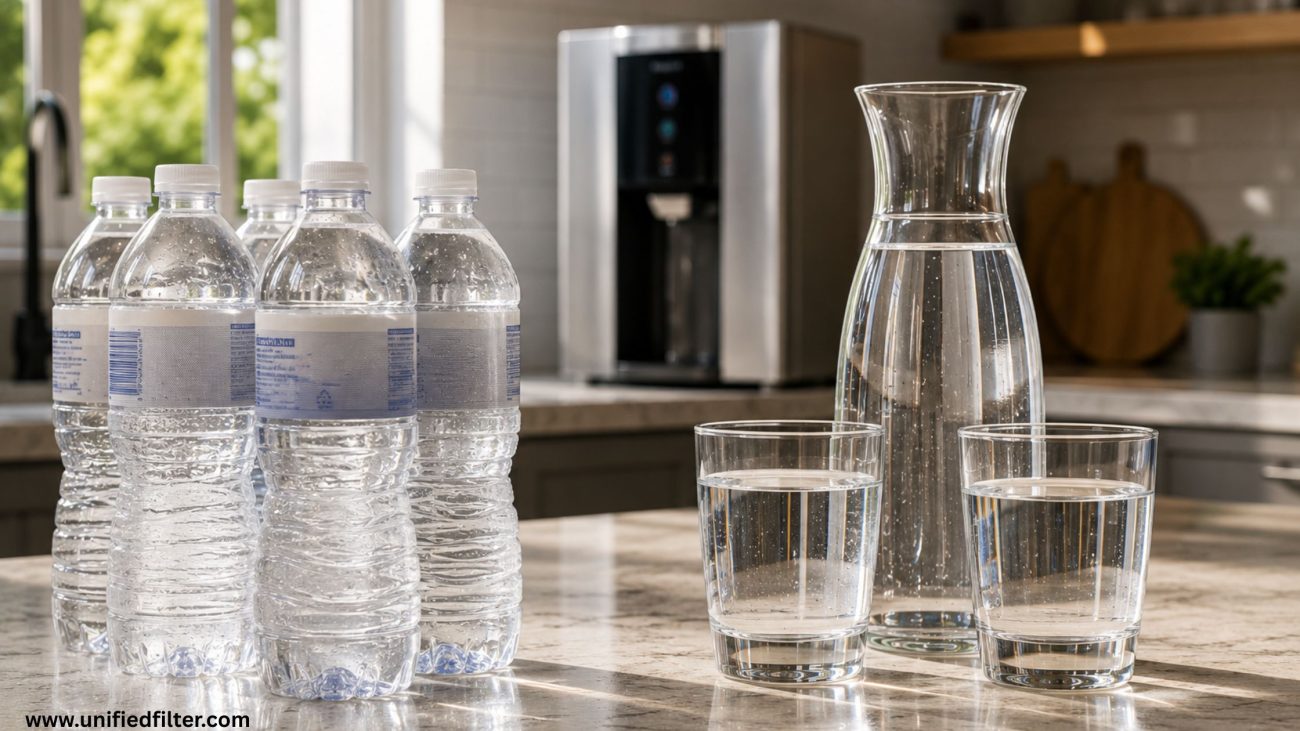
Bottled water contains an average of 240,000 plastic particles per liter, most of them nanoplastics leaching from the bottle itself. If you switched to bottled water to avoid microplastics in tap water, you likely made things worse.
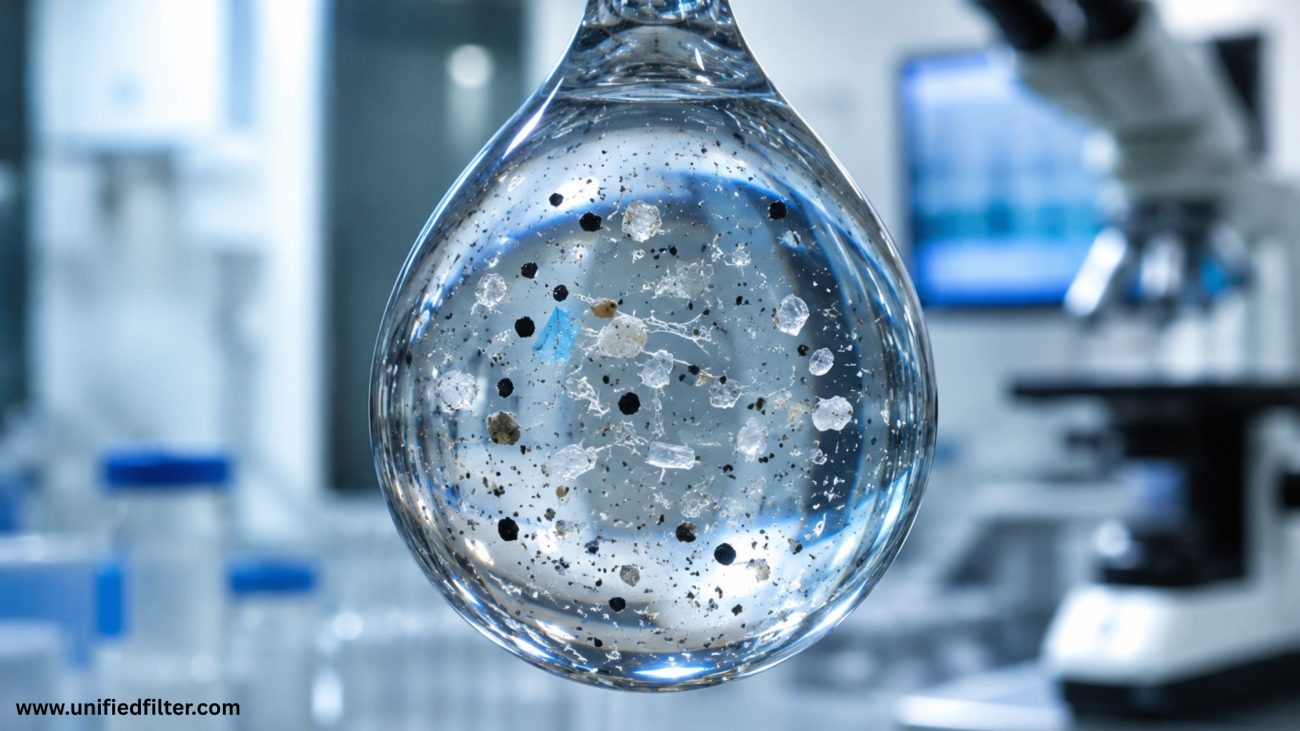
Microplastics have been detected in tap water, well water, rainwater, and human blood. Research on their health effects is still developing, but the WHO has called for more urgency in studying the issue. What we do know: the right water filter for microplastics removes them effectively from drinking water. Most filters, however, are not designed or certified to do this and many marketing claims are unverified.
This guide covers only filters with independent certification data, what they remove, which certifications actually matter, and what to avoid.
What Are Microplastics and Why Are They in Your Drinking Water?
Microplastics are plastic particles smaller than 5mm. Nanoplastics are even smaller, below 1 micron and harder to filter. They enter water supplies through plastic pollution, synthetic clothing fibers, tire wear, industrial runoff, and the breakdown of larger plastic items.
The most common microplastic sources in drinking water:
- Plastic water bottles, particles shed from the bottle material
- Municipal water treatment pipes, PVC piping degrades over time
- Synthetic clothing, laundry releases microfibers into wastewater
- Atmospheric deposition, microplastics fall from the air into reservoirs
- Industrial runoff, manufacturing facilities near water sources
The health implications are still being studied. Current WHO guidance says microplastics at present levels do not appear to pose an immediate risk but the research is incomplete, and accumulation in human tissue has been confirmed. Filtering them out is a reasonable precaution given the uncertainty.
Microplastics have been detected in human blood, lung tissue, placenta, and breast milk. Long-term health effects are not yet fully understood, making a water filter for microplastics a sensible option for reducing exposure through drinking water.
Water Filter for Microplastics | Which Technologies Actually Work
The key to water filters for microplastics performance is pore size. Microplastics range from 1 to 5,000 microns. Nanoplastics are below 1 micron. The filter’s pore size must be smaller than the particle to physically block it. Here is how each technology performs
| Technology | Pore Size | Microplastics? | Nanoplastics? | NSF Cert | Best For |
| Reverse osmosis (RO) | 0.0001 microns | Yes, 99%+ | Yes, most effective | NSF 58 / 401 | Best overall |
| Ultrafiltration (UF) | 0.01-0.1 microns | Yes, 99% | Partial only | NSF 401 | Good mid-range |
| Sub-micron carbon block | 0.5-1 micron | Yes, most sizes | Limited | NSF 401 | Pitcher option |
| Standard carbon block | 1-10 microns | Partial, larger only | No | NSF 42/53 | Chlorine/lead |
| Sediment filter (5 micron) | 5 microns | Larger particles only | No | NSF 42 | Pre-filter only |
| Standard GAC filter | Loose media | No | No | NSF 42 | Taste only |
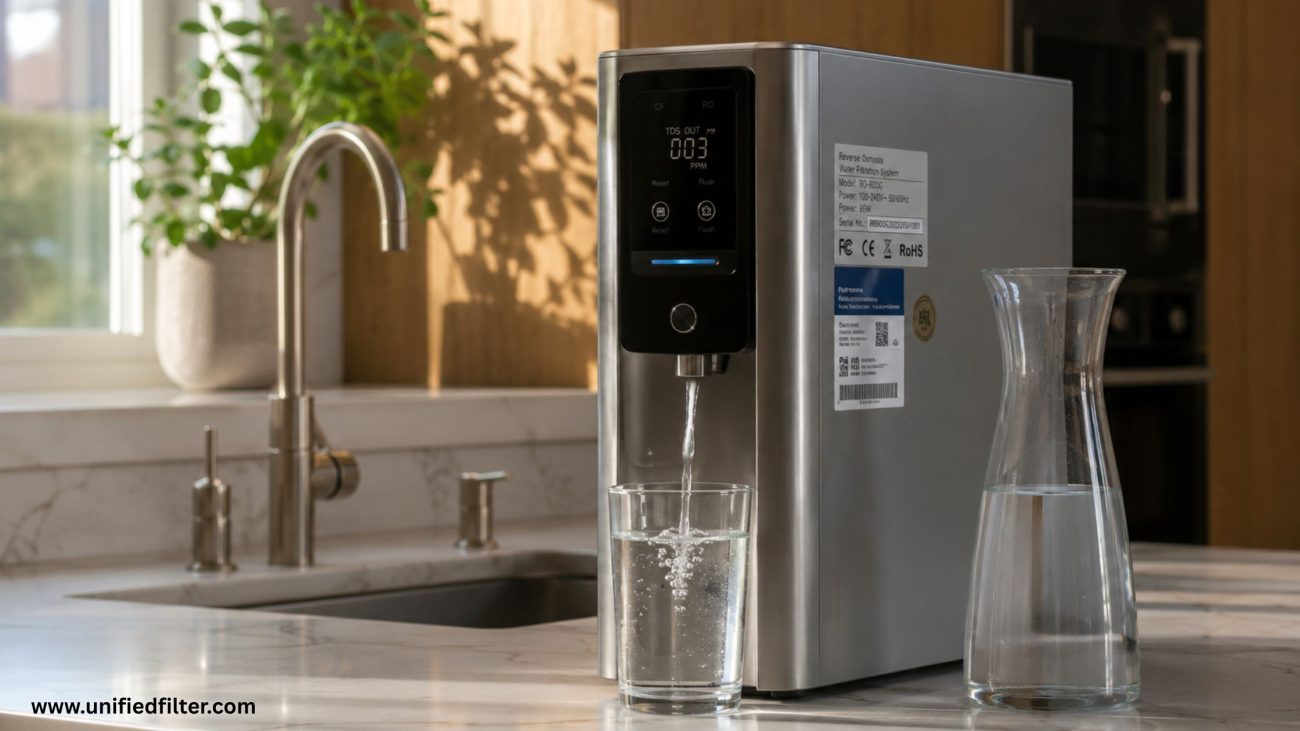
RO is the only technology that reliably removes both microplastics and nanoplastics. At 0.0001 microns, 10,000 times smaller than a human hair, the RO membrane blocks virtually everything including the smallest plastic particles.
Standard fridge filters, including Samsung HAF-QIN, EveryDrop OEM, and Brita Standard, are not certified for microplastic removal. Carbon block technology removes contaminants through adsorption, not mechanical filtration, so microplastics can pass through most standard carbon filters. For reliable reduction, choose a water filter for microplastics that is independently certified or uses reverse osmosis technology.
NSF Certifications for Microplastic Removal | What Each One Means
The water filter industry is full of unverified microplastic claims. Testing for microplastics is not the same as certified to remove microplastics. Here is what each certification actually means
| Certification | What It Covers | Notes |
| NSF/ANSI 401 | Emerging contaminants including microplastics | Most common certification for microplastic claims, verify in NSF database |
| NSF-244 | Microplastics specifically, most rigorous | LifeStraw Home is currently the only certified pitcher |
| NSF/ANSI 58 | RO systems, membrane performance | Covers microplastics by default, 0.0001 micron pore size |
| IAPMO (equivalent to NSF) | Independent accredited certification body | AquaTru uses IAPMO, equally valid to NSF International |
| NSF 42/53 only | Chlorine, lead, cysts, NOT microplastics | A filter with only NSF 42/53 is NOT certified for microplastics |
The most important rule is verify any microplastic certification claim directly at nsf.org or iapmo.org before purchasing. A filter that meets NSF 401 or is NSF tested without a verifiable certification number has not been independently certified. Search the product name or brand in the NSF database, if it does not appear, the claim is marketing only.
Does Your Refrigerator Water Filter Remove Microplastics?
Standard fridge filters are not certified for microplastic removal. EveryDrop OEM filters (NSF 42, 53, 401) and Samsung HAF-QIN/HAF-CIN (NSF 42, 53) use activated carbon block technology. Carbon block does trap some larger microplastic particles mechanically, but this is not consistent, not tested, and not certified.
NSF 401 certification on EveryDrop filters covers pharmaceuticals and emerging contaminants, but the specific microplastics standard under NSF 401 requires separate testing that most fridge filter manufacturers have not pursued.
For microplastic-specific protection from your drinking water, add a certified countertop RO or NSF-244 pitcher in addition to your fridge filter. Your fridge filter handles chlorine, lead, cysts, and pharmaceuticals. The RO or certified pitcher handles microplastics.
Bottled Water Has More Microplastics Than Filtered Tap Water
This is the finding most people do not expect. Bottled water contains significantly more microplastics than properly filtered tap water, sometimes orders of magnitude more. The particles come primarily from the plastic bottle itself, from the bottling process, and from the plastic cap.
A 2024 study found bottled water contains an average of 240,000 plastic particles per liter, compared to an estimated 4,000 in tap water. Filtering tap water with a certified system gives you water with far lower microplastic levels than any bottled water, and at a fraction of the cost.
This is also why the AquaTru Carafe’s glass collection container matters, filtering microplastics out of water and then storing it in a plastic tank defeats part of the purpose. Glass or stainless steel storage eliminates post-filtration plastic contact entirely.
Best Water Filters for Microplastics in 2026
Every product in this table holds independent certification for microplastic removal, no unverified claims
| Product | Type | Microplastics | NSF Cert | Other Contaminants | Annual Cost | Best For |
| AquaTru Carafe | Countertop RO | 99%+, glass carafe | NSF 401 / IAPMO | 82+ contaminants incl. PFAS | ~$100 | Best overall |
| Waterdrop G3 P800 | Tankless RO | 99%+ non-detect | NSF 42/53/58 | 14/14 analytes ND | ~$170/yr | High-volume families |
| LifeStraw Home | Pitcher | 99.999% | NSF-244, only pitcher | Bacteria, lead, PFAS | ~$50/yr | Best pitcher |
| Clearly Filtered Pitcher | Pitcher | 99.9% | NSF 42/53/401 | PFAS, lead, 365+ contaminants | ~$100/yr | PFAS + microplastics |
| Brita Elite | Pitcher | Certified NSF 401 | NSF 42/53/401 | Lead, chlorine | ~$32/yr | Budget option |
| SpringWell CF1 | Whole house | 5-micron pre-filter | NSF 42 | Chlorine, chloramines, VOCs | $100-200/yr | Every tap + shower |
For most households, the AquaTru Carafe is the strongest overall option, countertop RO, no installation, glass carafe, and IAPMO certified for 82+ contaminants including microplastics and PFAS. For a budget pitcher, Brita Elite is the most affordable NSF 401 certified option, though LifeStraw Home has the stronger NSF-244 microplastics-specific certification.
Keep Your Fridge Water Protected
A certified water filter for microplastics handles plastic particles. Your fridge filter handles chlorine, lead, cysts, and pharmaceuticals. Both working together give you the most comprehensive drinking water protection.
FAQs
What is the best water filter for microplastics?
Reverse osmosis filters, AquaTru Carafe or Waterdrop G3 P800, are the most effective, removing 99%+ of microplastics and nanoplastics. For pitchers, LifeStraw Home is the only one with NSF-244 certification.
Does a refrigerator water filter remove microplastics?
Standard fridge filters are not certified for microplastic removal. Add a certified RO system or NSF-244 pitcher for microplastic-specific protection.
What is NSF 401 and does it cover microplastics?
NSF 401 covers emerging contaminants including microplastics, but verifies the specific certification in the NSF database. Not all NSF 401 certified filters have been tested for microplastics specifically.
Is bottled water safer than tap water for microplastics?
No, bottled water averages 240,000 plastic particles per liter, far more than properly filtered tap water. Filtering tap water is a better option.
What is NSF-244 certification for microplastics?
NSF-244 is the most rigorous microplastics-specific certification standard. LifeStraw Home is currently the only pitcher with this certification.