
Alkaline Water Filter | What It Actually Does, the Science, and Which to Buy

An alkaline water filter raises your water’s pH above 7 by adding minerals like calcium and magnesium. There are three types, remineralization stages (add-on to RO systems), alkaline pitcher filters, and water ionizers (electrolysis). The best evidence supports alkaline water for acid reflux relief. Most other health claims are not well supported by research. Higher pH does not mean safer or cleaner water.
The alkaline water filter market is full of bold health claims anti-aging, cancer prevention, detoxification, energy. Some of these are well supported by science. Most are not. This guide covers what alkaline water and alkaline filters actually do, the honest state of the research, and which products deliver reliable results.
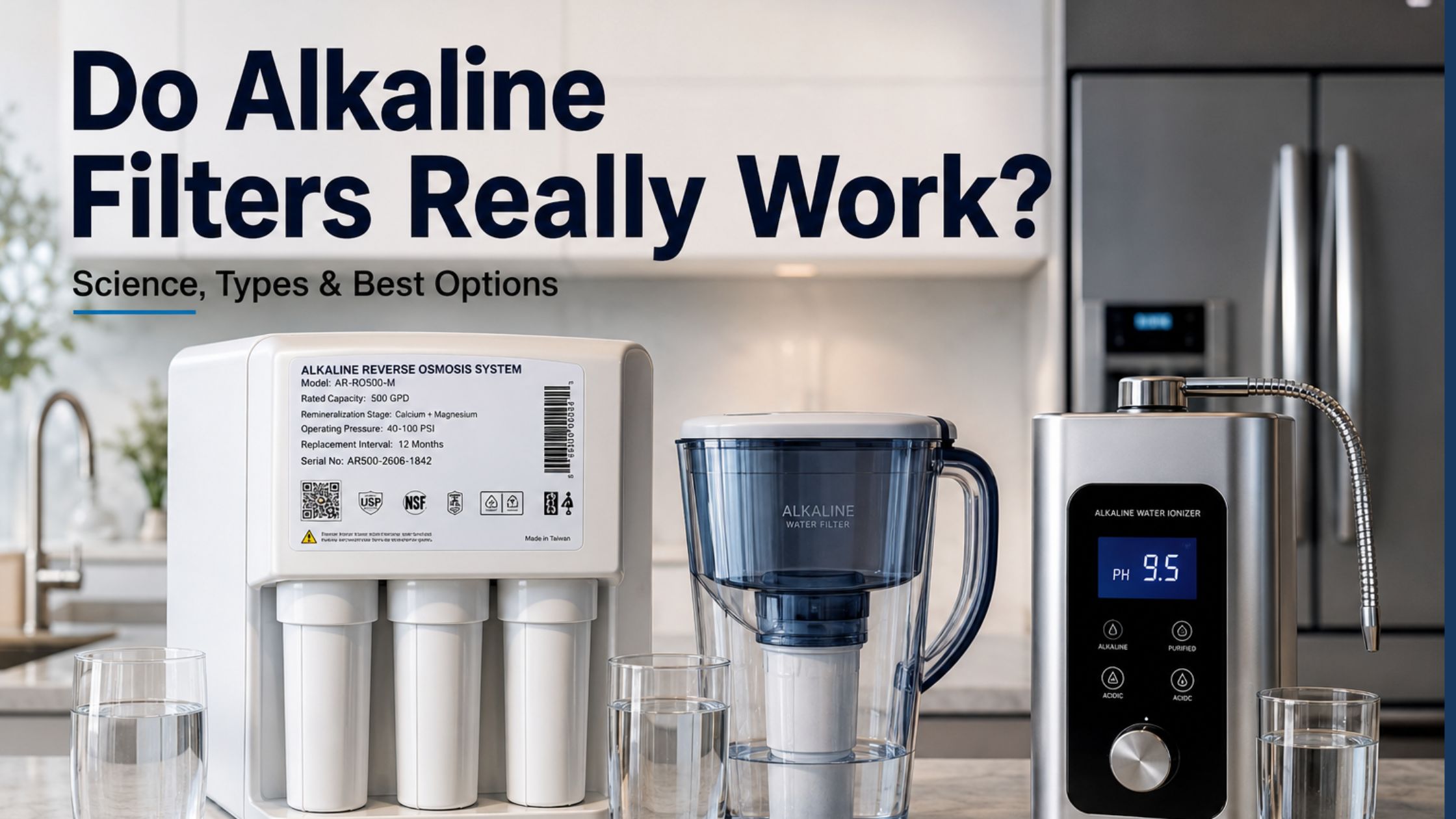
An alkaline water filter is not the same as a water ionizer. They achieve alkaline water through different mechanisms an EPA are sold at very different price points. And both are completely different from a standard water filter which removes contaminants but does not change pH at all.
What Is Alkaline Water and What Does an Alkaline Water Filter Do?
Water’s pH measures how acidic or alkaline it is on a scale from 0-14. Neutral is 7. Most tap water is slightly acidic to neutral, roughly 6.5 to 7.5 depending on your city. Alkaline water has a pH above 7 typically 8 to 10 in filtered or bottled alkaline products.
An alkaline water filter raises pH one of two ways:
Remineralization (most filters): water passes through mineral media typically calcium, magnesium, and sometimes potassium, which dissolves into the water and raises pH. This is a passive process requiring no electricity and no ongoing chemical inputs. The minerals added are the same ones found naturally in spring water.
Electrolysis (ionizers): an electric current splits water molecules into alkaline (OH-rich) and acidic (H+-rich) streams. The alkaline stream is delivered for drinking. This technology produces very high pH (up to 11) and negative ORP (oxidation-reduction potential) , the basis for ionizer “antioxidant” claims.
Regular tap water pH is controlled by your municipality and typically falls between 6.5 and 8.5 the EPA‘s recommended range. Tap water in this range is safe. Alkaline filters raise this further, they do not fix unsafe water. Contaminant removal requires a separate filtration stage.
Alkaline Water Filter Types | Remineralization vs Pitcher vs Ionizer
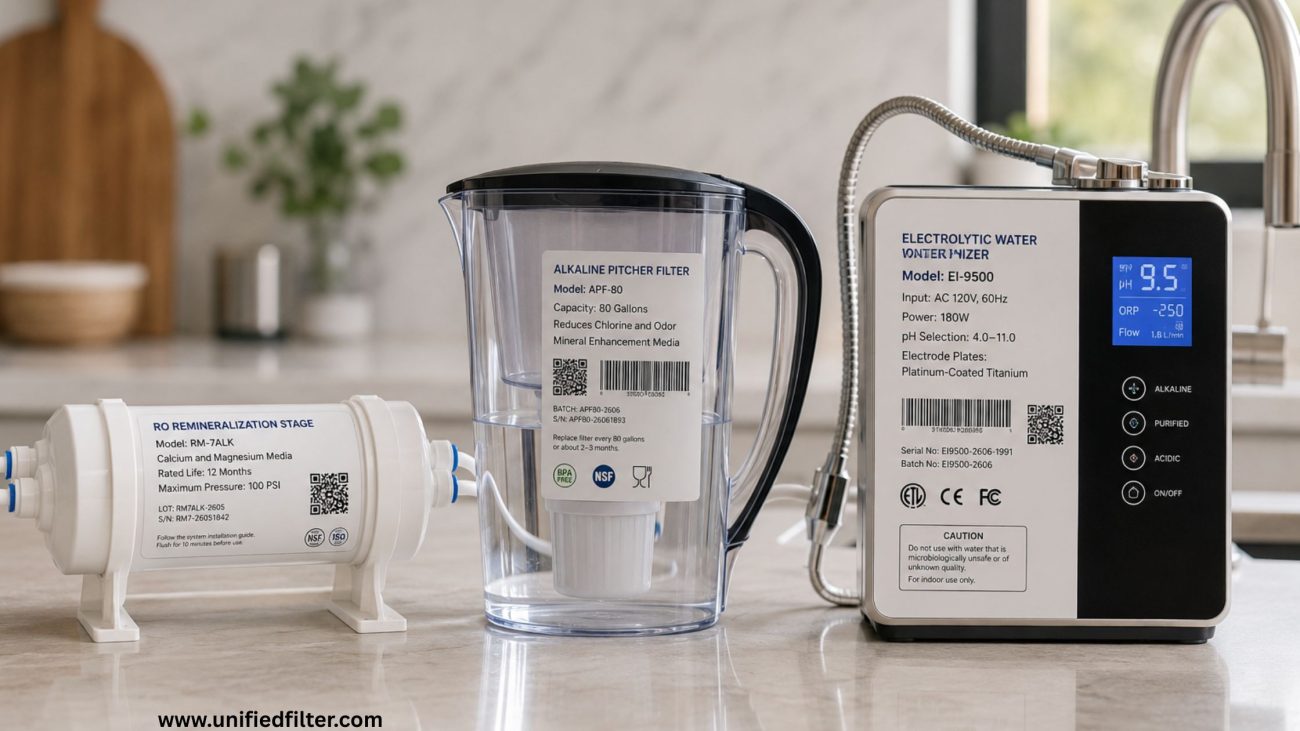
The term alkaline water filter covers three very different products at very different price points. Here is the honest comparison.
| Type | How It Works | pH Range | Also Filters? | Cost | Best For |
| Remineralization stage (add-on to RO) | Adds calcium/magnesium back after RO removes them | 7.5-9.5 | No, works with RO system | $50-$150 add-on | RO owners wanting taste and pH improvement |
| Alkaline pitcher filter | Mineral media raises pH as water passes through | 8.0-9.5 | Yes, chlorine + basic contaminants | $30-$90 pitcher | Budget , no installation |
| Water ionizer (electrolysis) | Electrolysis splits water into alkaline and acidic streams | 8.0-11.0 | Carbon pre-filter only | $500-$4,000 | Daily high-volume alkaline use |
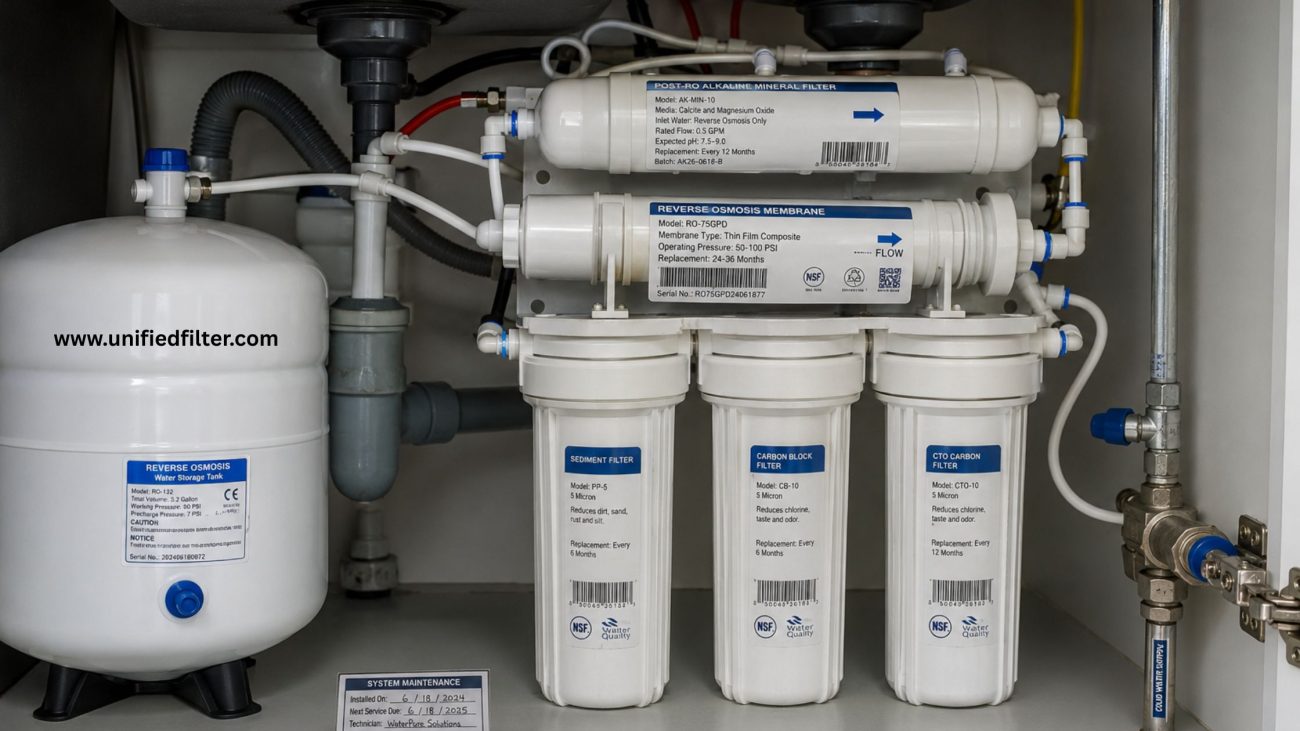
| Alkaline RO system (combo) | Full RO filtration + built-in remineralization stage | 7.5-9.5 | Yes, 99%+ contaminants | $200-$700 | Best overall, clean + alkaline |
An RO system with a built-in remineralization stage. You get comprehensive contaminant filtration (RO handles 99%+ of contaminants) plus alkaline pH correction in one system. Standalone alkaline pitcher filters add pH without the contamination protection of RO.
Why RO Water Often Needs Remineralization | The pH Problem
Standard reverse osmosis is the most thorough filtration available; it removes 99%+ of dissolved contaminants including lead, PFAS, nitrates, arsenic, and fluoride. But RO also removes calcium and magnesium, the minerals that give water its taste and slightly alkaline pH.
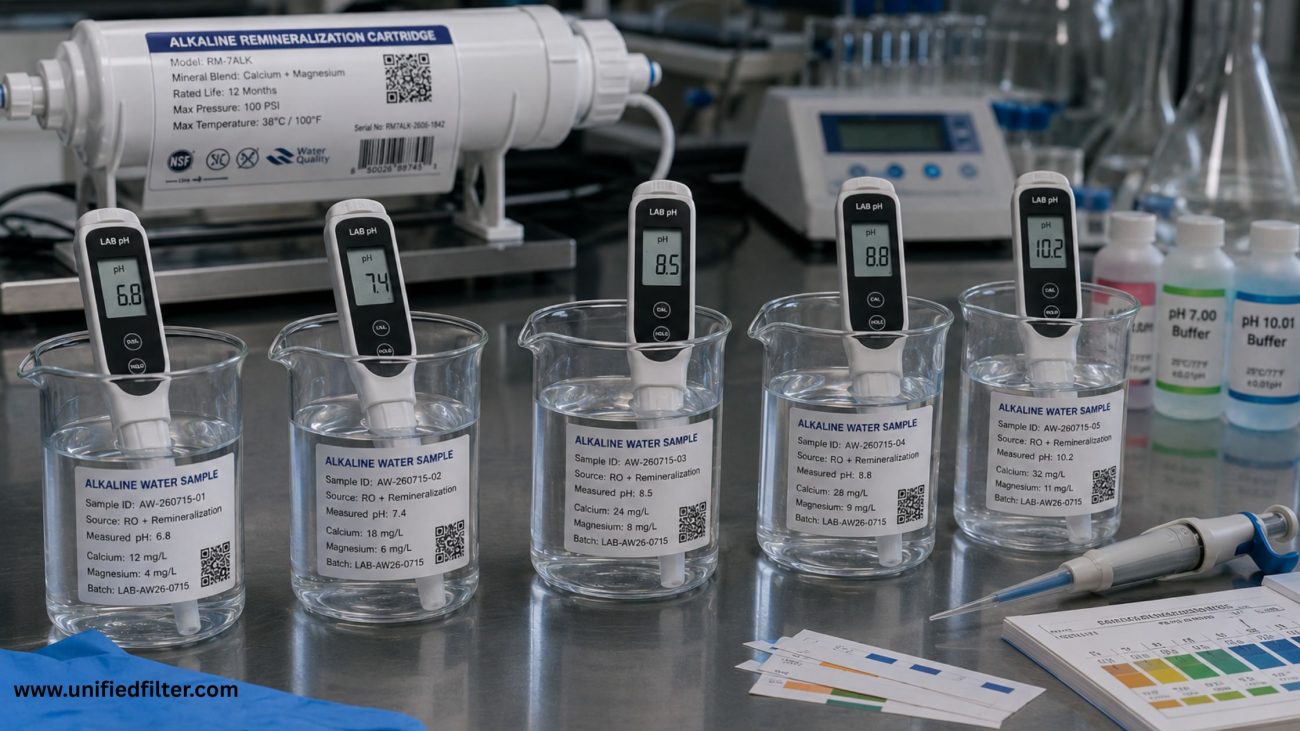
In independent testing, RO removed 97% of calcium and 94% of magnesium from tap water. The pH dropped from neutral to slightly acidic around 6.6. Many people describe this water as “flat” or tasteless. Some find it unpleasant to drink after being used to mineral-rich tap or bottled water.
A remineralization stage solves this by adding back a small amount of calcium and magnesium after the RO membrane, raising pH back into the 7.5-9.5 range and improving taste. In testing, the AquaTru Carafe with remineralization filter raised pH from 7.3 to 10.7 a significant change from a single filter stage.
Remineralization is best understood as a taste and pH correction for RO water, not a standalone health treatment. The primary value of the RO system is contamination removal. Remineralization is the finish.
Alkaline Water Health Claims | What the Research Actually Supports
This is the section most alkaline water filter guides skip. Here is an honest summary of what the evidence shows.
| Claim | Evidence | What the Research Actually Shows |
| Acid reflux / LPR relief | Best supported | 2012 study,pH 8.8 water deactivated pepsin enzyme that causes LPR damage. Strongest clinical evidence for alkaline water. |
| Improved hydration | Mixed | Some small studies show faster hydration post-exercise. Not confirmed in large randomized trials. Effect likely minor. |
| Athletic performance | Weak | A few small studies suggest reduced lactic acid buildup. Not replicated consistently. |
| Cancer prevention | Not supported | No peer-reviewed evidence that alkaline water prevents or treats cancer. The body tightly regulates blood pH regardless of what you drink. |
| Detoxification | Not supported | The kidneys and liver handle detoxification. Drinking alkaline water does not change this process. |
| Anti-aging / antioxidant | Not supported | Ionizer ORP claims are based on lab measurement. No clinical evidence this ORP value translates to health benefits in vivo. |
Higher pH is not a proxy for water safety or quality. You can have water with pH 9.5 that still contains lead, nitrates, or PFAS. What a filter removes is defined by its filtration technology not its pH output. Always prioritize contamination removal over pH claims when evaluating a water filter system.
Does a Refrigerator Water Filter Make Water Alkaline?
No, standard refrigerator water filters are activated carbon block filters. They remove chlorine, lead, cysts, and pharmaceuticals but do not change water pH. Your fridge filter does not make your water alkaline.
If you want alkaline water from your fridge dispenser, you would need to install a remineralization or alkaline filter stage before the water reaches the fridge, on the supply line. Most households do not do this. The fridge filter handles the contaminant protection, alkaline filtration is a separate system at a separate tap if desired.
Best Alkaline Water Filters in 2026 | Tested and Certified Options
Here are the top options matched to different budgets and needs.
| Product | Type | pH Output | Also Filters? | Best For |
| AquaTru Carafe Alkaline | Countertop RO + remineralization | Up to 10.7 | Yes, 83 contaminants IAPMO certified | Best overall, filtration + alkaline in one |
| iSpring RCC7AK | Under sink RO + alkaline stage | 8.0-8.5 | Yes, NSF 58 certified | Under sink RO with alkaline finish |
| Waterdrop X16-BAS | Tankless RO + alkaline mineral | 7.5-9.0 | Yes, NSF 42/58/372 | Modern kitchen, no tank, alkaline |
| Invigorated pH Restore Pitcher | Alkaline pitcher | Up to 9.0 | Yes, chlorine, heavy metals | No-install, budget alkaline pitcher |
| Aqua Ionizer Deluxe 5.0 | Electric ionizer | Up to 11.0 | Carbon pre-filter only | Daily high-volume alkaline water |
For most people: The AquaTru Carafe Alkaline is the strongest overall option, countertop RO with no installation, IAPMO certified for 83 contaminants, and raises pH significantly with the remineralization filter. It is the only filter tested to eliminate 100% of all health-related contaminants claimed.
For acid reflux specifically: Any system producing pH 8.5+ water consistently. The 2012 research showing benefit used pH 8.8 water, achievable with most systems above.
For budget: An alkaline pitcher like the Invigorated pH Restore handles basic chlorine removal and raises pH. Filter cartridges last only 80 gallons ,factor in $80-120/year ongoing cost.
Water Ionizer vs Alkaline Filter | Two Very Different Products
Water ionizers and alkaline filters are frequently confused they are not the same product:
Alkaline filter (remineralization): Passive mineral addition. No electricity. pH 8-9.5. $30-$700 depending on type. Sustainable long-term.
Water ionizer: Electric appliance using electrolysis. Produces pH up to 11 and negative ORP. $500-$4,000. Requires electricity and regular cleaning. The ORP (antioxidant) claims are based on lab measurement, clinical evidence for in-vivo benefits is not established.
For most households, a remineralization RO system provides the same alkaline pH benefit at a fraction of the cost, with far superior contaminant removal. Ionizers make sense primarily for households committed to high-volume daily alkaline water consumption and who have already addressed contamination separately.
Frequently Asked Questions
What does an alkaline water filter do?
It raises your water’s pH above 7 by adding minerals like calcium and magnesium, improving taste and increasing alkalinity, but not removing contaminants on its own.
Is alkaline water actually better for you?
The strongest evidence supports alkaline water for acid reflux relief (pH 8.8 deactivates pepsin). Most other claimed benefits,cancer prevention, detox, and anti-aging are not supported by current research.
What is the difference between an alkaline filter and a water ionizer?
An alkaline filter adds minerals passively to raise pH. A water ionizer uses electricity to split water into alkaline and acidic streams via electrolysis, a completely different and much more expensive technology.
Does a refrigerator water filter make water alkaline?
No, fridge filters are activated carbon block filters that remove contaminants but do not change pH. A separate remineralization system is needed for alkaline water.
Why does RO water need remineralization?
RO removes 97% of calcium and 94% of magnesium, making the water slightly acidic and flat-tasting. A remineralization stage adds minerals back to restore pH and improve taste.