

Water Filter for Ice Maker | What You Actually Need and Why Ice Tastes Bad

Most people searching for a water filter for ice maker are solving the wrong problem. They think their ice maker needs its own separate filter. For the majority of built-in fridge ice makers, it does not. The same filter that cleans your drinking water also cleans the water going to your ice maker. Basically one filter does two jobs.
Where it gets confusing is when the ice still tastes bad after you replace the filter. That is a different problem and this guide covers that too.
Does an Ice Maker Need Its Own Separate Filter?
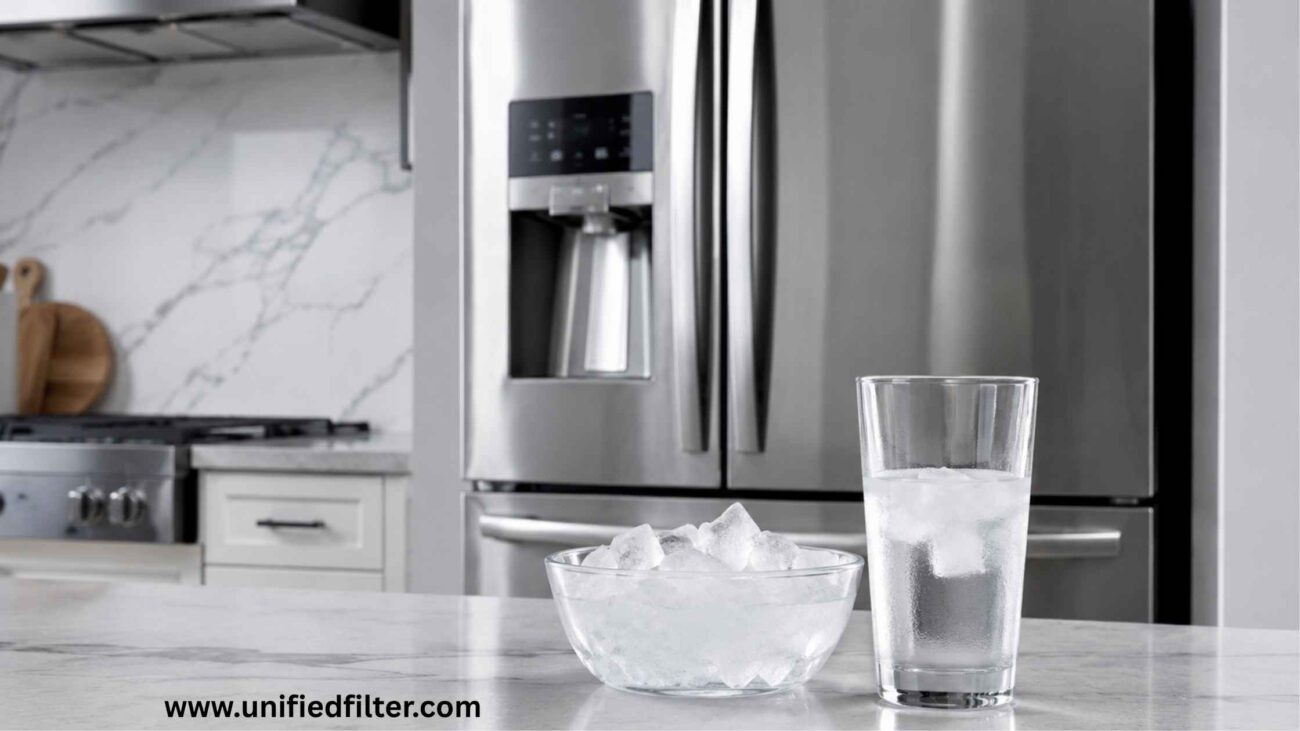
For built-in fridge ice makers, no. Here is why.
In a refrigerator with both a water dispenser and an ice maker, both share the same water supply line. That line runs through one filter before it splits, some water going to the dispenser, some going to the ice maker. So when you replace your fridge filter, you are filtering both at the same time.
This is why the genuine EveryDrop fridge filter is called an ice and water refrigerator filter. It was designed to handle both. The NSF 42, 53, and 401 certifications cover water going to both the dispenser and the ice maker.
If your fridge has a built-in ice maker, your fridge filter is your ice maker filter. Replace it every 6 months and you are done.
This applies to built-in fridge ice makers only. Countertop and undercounter ice makers are separate appliances with their own water connections, those do need their own filters.
How Your Fridge Filter Cleans Ice Maker Water?
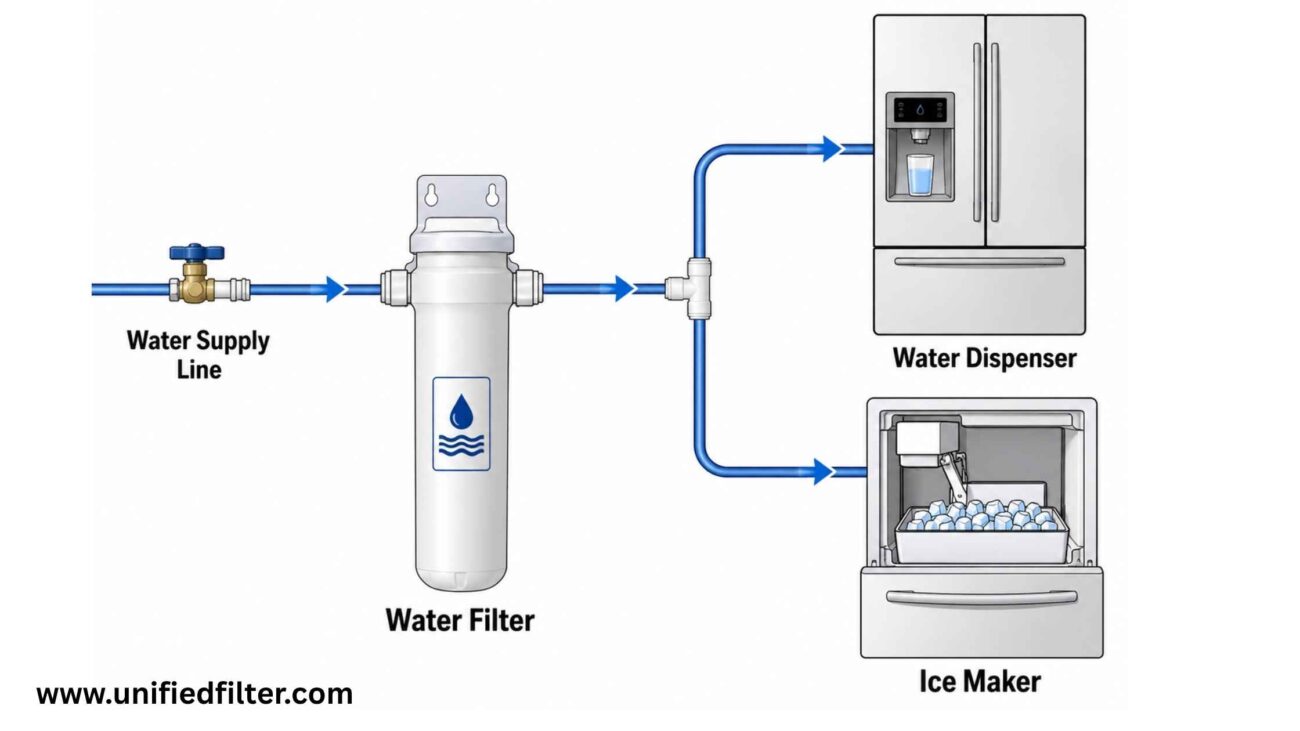
Water enters your fridge from the supply line in the wall. Before it goes anywhere, it passes through the filter cartridge, usually located in the upper interior of the fridge or in the base grille at the bottom front.
That cartridge is packed with activated carbon. As water flows through, the carbon traps chlorine, lead, cysts, pharmaceuticals, and other contaminants through a process called adsorption. What comes out is cleaner water and that same clean water goes to both your dispenser and your ice maker.
This is why ice quality is actually a good indicator of filter health. Fresh filter means clean-tasting ice. Overdue filters can be detected by ice that tastes like the tap, or worse. The ice maker does not lie.
According to the EPA, lead in drinking water has no safe level for children. If you have young children at home, using an NSF 53 certified filter for both drinking water and ice is essential.
Why Does Ice Taste Bad Even With a Water Filter for the Ice Maker?
Your filter is relatively new, but the ice still tastes off. Here are the real reasons, most of which have nothing to do with the filter itself.
| Ice Problem | Real Cause | Fix |
| Ice tastes like chlorine | Filter overdue or not NSF 42 certified | Replace filter with NSF 42 certified OEM |
| Ice smells musty | Ice bin not cleaned, old ice sitting too long | Empty and wash ice bin, replace filter |
| Ice is cloudy | Minerals in water, not a filter issue | Normal for carbon filters — RO needed for clear ice |
| Ice maker stopped after filter change | Air lock in water line | Run 2-3 gallons through dispenser, reset ice maker |
| Ice tastes plastic-y | New filter not flushed | Flush 3 gallons, discard first batch of ice |
| Small or hollow ice cubes | Low water pressure or clogged filter | Replace filter, check water supply valve |
The ice bin problem nobody talks about
Even with a perfect filter, ice can taste bad if the ice bin has not been cleaned. Ice absorbs odors from the freezer. Old ice sitting in the bin for weeks picks up smells from frozen food, spills, and anything else in the freezer. The fix is simple, empty the bin, wash it with warm soapy water, dry it completely, and let fresh ice form.
Do this every 3-6 months and your ice will taste noticeably better, regardless of what filter you are using.
Why is my ice cloudy?
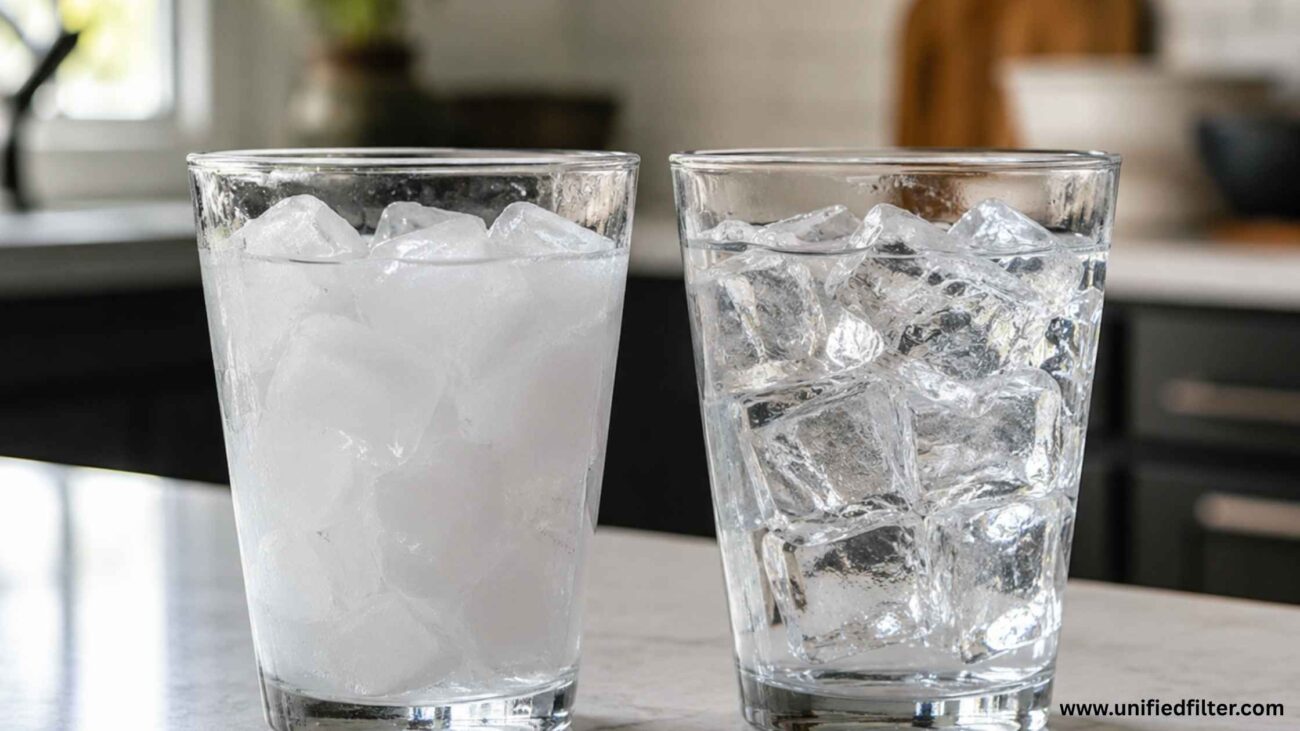
Cloudy ice is caused by dissolved minerals in the water, calcium, magnesium, and other trace compounds. Carbon block filters like the EveryDrop fridge filter do not remove these minerals and that is actually a good thing for drinking water. But it means the ice will not be perfectly clear.
If crystal-clear ice matters to you then you need an RO (reverse osmosis) system. RO removes virtually all dissolved solids, producing water that freezes into clear, restaurant-style ice. It is overkill for most households, but if aesthetics matter, that is the answer.
Standalone Ice
If you have a countertop, undercounter, or commercial ice machine then yes, you do need a separate water filter for the ice maker. These appliances connect directly to a water line or fill manually from tap water. They have no built-in filtration.
| Ice Maker Type | Needs Separate Filter? | What Filter | Why |
| Built-in fridge ice maker | No | Same fridge filter (EveryDrop) | Shares water line with dispenser |
| Countertop ice maker | Optional | External inline filter | No built-in filtration |
| Undercounter ice maker | Yes, recommended | Inline water filter | Plumbed separately from fridge |
| Commercial ice machine | Yes, required | Commercial grade water filter | Scale and contaminants damage machine |
Countertop ice makers
Most countertop ice makers fill from a reservoir you pour water into manually. The easiest fix: fill it with water from your fridge dispenser (already filtered) rather than straight from the tap. No separate filter needed.
If your countertop ice maker is plumbed in, add an inline water filter to the supply line. These cost $20-$60 and connect between the water supply and the ice maker. Replace every 6 months like a regular fridge filter.
Undercounter and commercial ice machines
These need proper filtration and not just for taste. Hard water minerals build up inside ice machines and damage the evaporator and water pump over time. A good inline filter with scale inhibition extends the life of the machine significantly. For commercial ice machines, manufacturers typically require NSF 42 and 53 certified filters to maintain warranty coverage.
Ice Filter Maintenance | What Actually Matters?
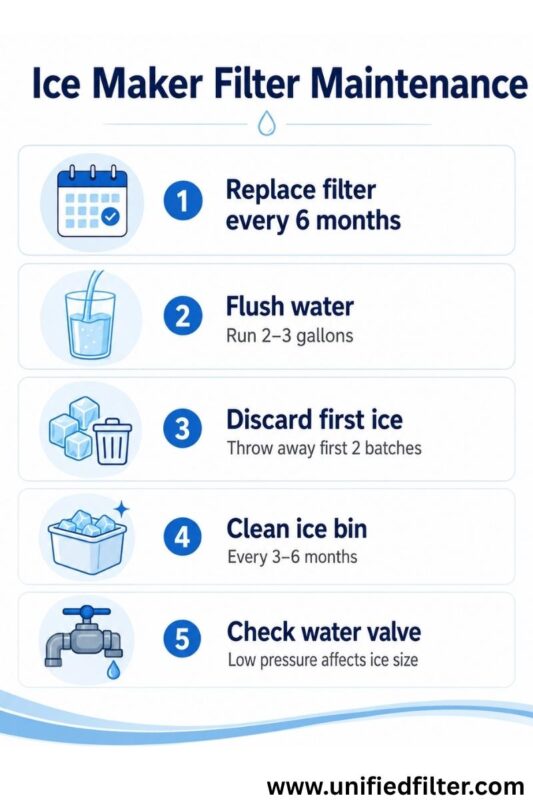
Most people do one of two things, they replace the filter perfectly on schedule, or they forget about it completely for 18 months. Here is what actually matters for great-tasting ice:
- Replace the fridge filter every 6 months. This is the single most important thing. A carbon filter that is past its life does not just stop working. It can start releasing trapped contaminants back into the water going to your ice maker.
- Flush the new filter before making ice. After installing a new filter, run 2-3 gallons through the dispenser and discard. Then discard the first two batches of ice. This clears air and loose carbon from the new cartridge. Skip this step and the first batch of ice will taste odd.
- Clean the ice bin every 3-6 months. Wash with warm soapy water, rinse well, and dry completely. Ice absorbs freezer odors, a clean bin makes a bigger difference than most people expect.
- Check the water supply valve. If ice quality dropped suddenly, not gradually then check the water supply valve behind the fridge. A partially closed valve reduces water pressure and produces small, hollow, or misshapen ice cubes.
- Reset the ice maker after filter changes. Some fridges need the ice maker reset after a filter change to resume normal production. Hold the reset button on the ice maker arm for 3 seconds. Wait 24 hours for full ice production to resume.
Get the Right Water Filter for Your Ice Maker
If you have a built-in fridge ice maker then your water filter for ice maker is the same EveryDrop filter that cleans your drinking water. Check the label on your current fridge filter, it will say Filter 1, 2, 3, 4, or 5. That is the replacement you need.
FAQs
Does an ice maker need its own water filter?
Not if it is built into your fridge. The fridge filter cleans water for both the dispenser and ice maker. Standalone ice machines need their own inline filter.
Why does my ice taste bad after replacing the filter?
Discard the first two batches of ice after a filter change. Loose carbon from the new cartridge causes the odd taste and clears after flushing.
Why is my ice cloudy?
Dissolved minerals in water cause cloudy ice, carbon filters do not remove minerals. Only RO systems produce crystal-clear ice.
How often should I replace the water filter for my ice maker?
Every 6 months or 200 gallons, same schedule as your fridge water filter, because it is the same filter.
Why did my ice maker stop after I changed the filter?
Air lock, run 2-3 gallons through the dispenser, then hold the ice maker reset button for 3 seconds and wait 24 hours.