
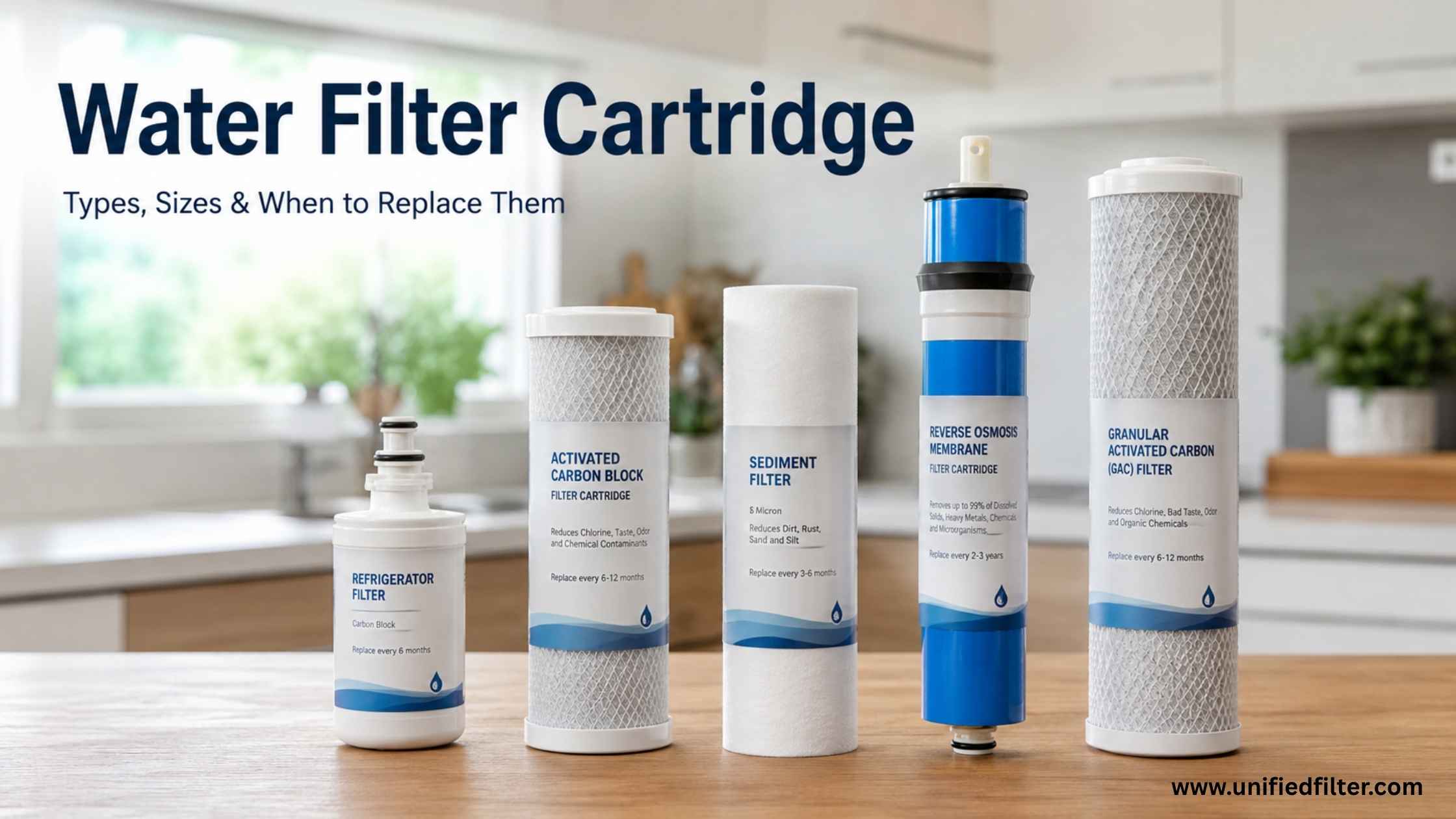

The term water filter cartridge gets used for everything from a $7 Brita pitcher insert to a $200 RO membrane. They have almost nothing in common except that they go inside a filter system. Understanding which type of cartridge you have and why it matters is the difference between water that is actually filtered and water that only looks like it is.
This guide covers every major water filter cartridge type, the standard sizes, what each one removes, and how to know when it has stopped working.
What Is a Water Filter Cartridge and How Does It Work?
A water filter cartridge is the replaceable element inside a filter system, the part that actually does the filtration. The housing (the plastic casing, the pitcher, the fridge housing) just holds the cartridge and directs water through it. When the cartridge is saturated or expired, the housing does nothing, it is just plastic water running through.
Most home water filter cartridges work through one of three mechanisms:
- Adsorption: Contaminants bond to the surface of the filter media, typically activated carbon. This is how most fridge filters and pitcher filters work. Highly effective for chlorine, lead, and organic compounds.
- Mechanical filtration: Physical pores in the cartridge trap particles above a certain size. Sediment filters work this way, they catch sand, rust, and particles but do not remove dissolved chemicals.
- Membrane filtration: Water is forced through a semi-permeable membrane under pressure, RO systems. Removes dissolved solids, fluoride, nitrates, and PFAS at the molecular level.
Most home filter systems combine mechanisms. An under sink RO system uses a sediment pre-filter (mechanical), a carbon block pre-filter (adsorption), and the RO membrane, each stage targeting different contaminants.
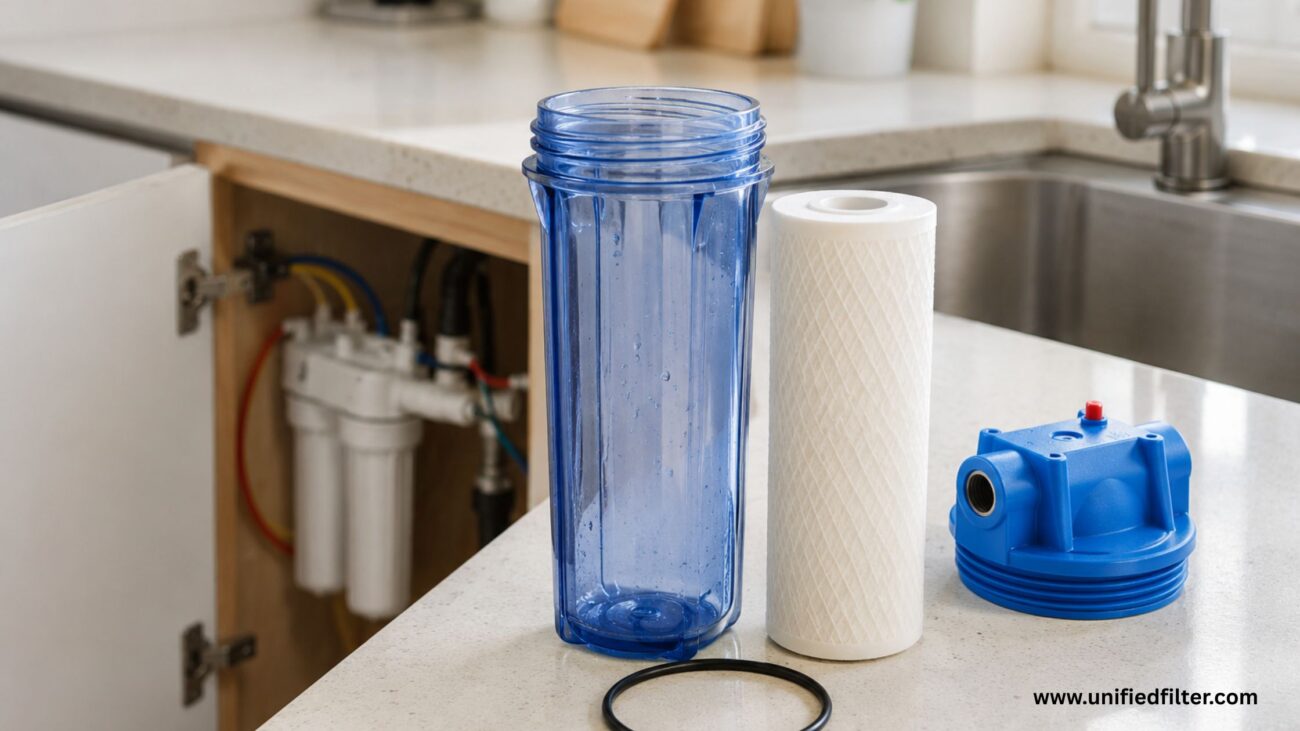
Water Filter Cartridge Types | What Each One Actually Does
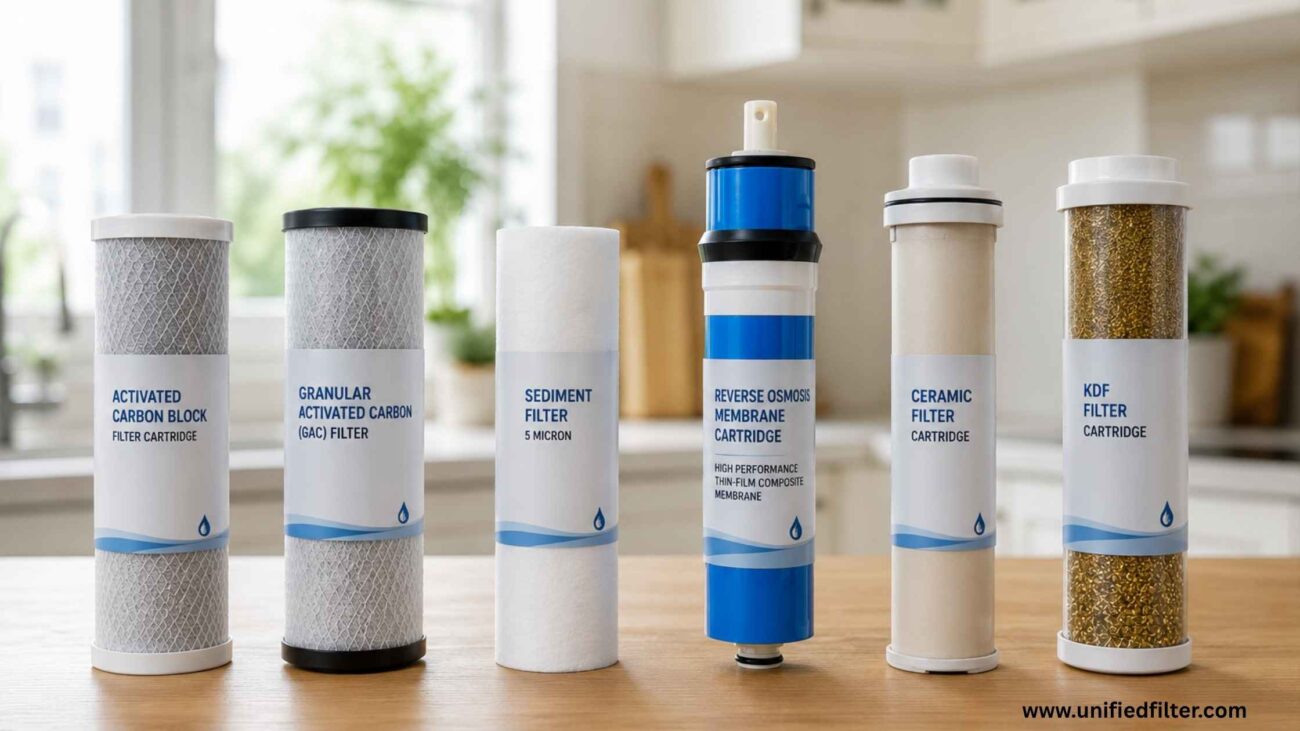
Not all water filter cartridges are the same. Here is a complete breakdown of the main types used in home filtration systems:
| Cartridge Type | What It Removes | Best For | NSF Cert | Used In |
| Activated carbon block | Chlorine, lead, cysts, VOCs, pharmaceuticals | City water — most common concern | NSF 42, 53, 401 | Fridge filters, under sink, pitcher |
| Granular activated carbon (GAC) | Chlorine, taste, odor, some chemicals | Pre-filter or whole house | NSF 42 | Whole house, sediment pre-filter stage |
| Sediment / PP | Sand, rust, dirt, particles above 1-25 micron | Well water, older pipes, pre-filter | NSF 42 | Under sink pre-filter, whole house stage 1 |
| RO membrane | PFAS, fluoride, nitrates, TDS, heavy metals | Comprehensive purification | NSF 58 | Under sink RO, countertop RO systems |
| KDF (Kinetic Degradation Fluxion) | Heavy metals, chlorine, chloramines, bacteria | Shower filters, whole house chloramine removal | NSF 42 | Shower filters, whole house carbon+KDF combo |
| Ceramic | Bacteria, cysts, sediment | Well water bacteria, off-grid | NSF 53 | Gravity filters, countertop ceramic systems |
Which cartridge type does a fridge filter use?
Fridge filters, including Samsung HAF-QIN, EveryDrop EDR1-5, and Westinghouse WFCB, all use activated carbon block cartridges. The carbon is compressed into a solid block inside a plastic housing. Water flows through the carbon, contaminants adsorb onto the carbon surface, and clean water exits. Simple, effective, and NSF 42/53/401 certifiable, which is why it is the most widely used technology in home refrigerators.
NSF certification tells you what a cartridge has been independently verified to remove. A carbon block cartridge claiming to remove 24 contaminants without an NSF certification number is making an unverified claim. Always check nsf.org before trusting a filter’s marketing.
Water Filter Cartridge Sizes | Standard Dimensions Explained
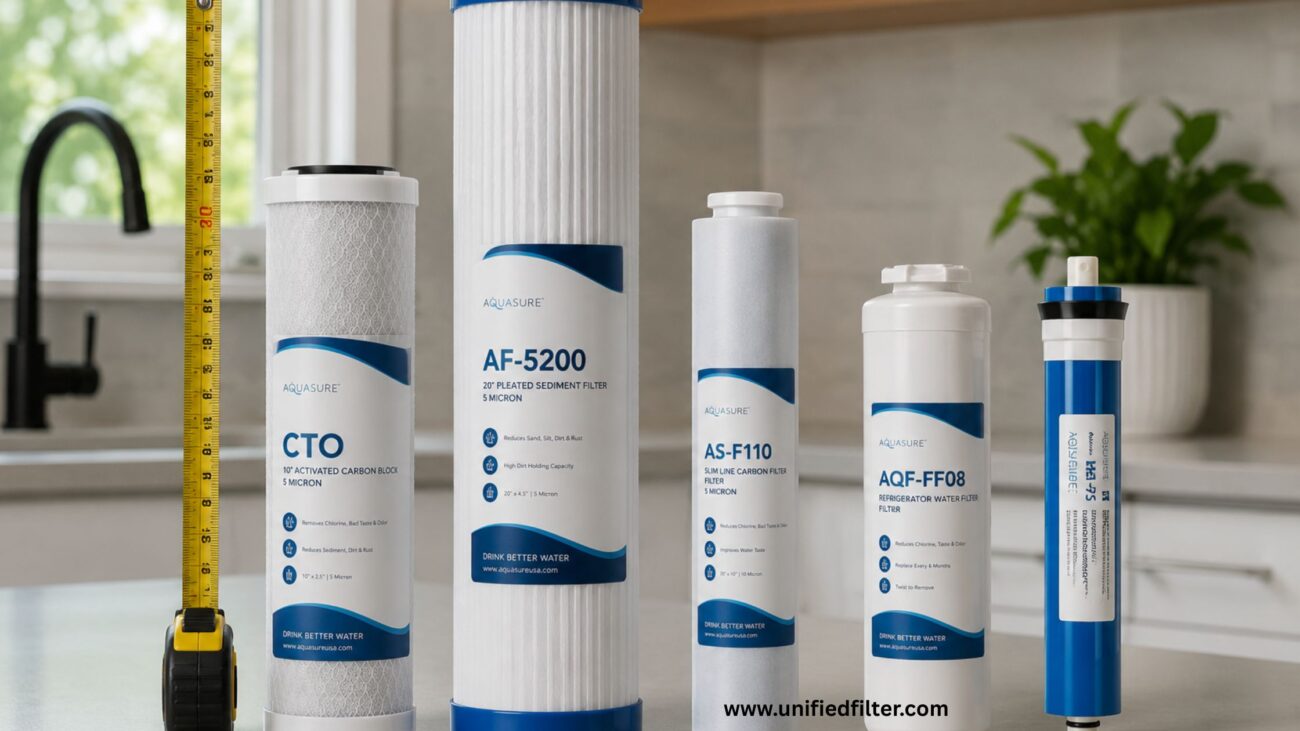
If you have an under sink or whole house filter system, cartridge size matters. Order the wrong size and it will not fit the housing. Here are the standard dimensions and what each is used for:
| Cartridge Size | Common Use | Flow Rate | Filter Life |
| 10 inch standard | Under sink, countertop RO pre-filter | 0.5 – 1 GPM | 6-12 months |
| 20 inch standard | Whole house pre-filter | 1 – 3 GPM | 6-12 months |
| 10 inch slim / compact | Space-limited under sink systems | 0.5 GPM | 6 months |
| Fridge cartridge (proprietary) | Internal fridge filter housing | 0.5 GPM | 6 months / 200-300 gal |
| RO membrane (standard) | Under sink RO systems | 50-100 GPD | 2 years |
Fridge filter cartridges are proprietary, each brand and model uses a specific shape and size that fits only that fridge’s housing. There is no universal fridge filter cartridge. Always use the exact part number from your fridge filter label.
For under sink and whole house systems: The 10-inch standard is the most common residential size. When ordering replacement cartridges, confirm both the diameter and length of your housing, standard sizes are 10×2.5 inch and 10×4.5 inch (big blue). Ordering a 10×4.5 inch cartridge for a 10×2.5 inch housing is the most common sizing mistake.
When to Replace a Water Filter Cartridge
The single most important thing about any water filter cartridge is replacing it on schedule. An expired cartridge does not just stop working in some cases it can actively worsen your water quality by releasing previously trapped contaminants.
| Cartridge Type | Replace Every | Signs It Is Overdue | What Happens If You Don’t |
| Fridge filter (carbon block) | 6 months / 200-300 gallons | Slow flow, off taste, red indicator | Releases trapped contaminants back into water |
| Under sink carbon block | 6-12 months | Slow flow, taste change | Contaminant removal drops to near zero |
| Sediment pre-filter | 3-6 months | Pressure drop, visible discoloration | Clogs, reduces flow, damages main filter |
| RO membrane | 2 years | TDS creep on meter | TDS rises, filtration efficiency drops significantly |
| Pitcher filter | 2 months / 40 gallons | Slow pour, taste change | Minimal filtration, essentially unfiltered water |
The sediment pre-filter rule: always replace sediment pre-filters more frequently than your main carbon filter. A clogged sediment filter forces water pressure through the carbon too fast, reducing contact time and filtration effectiveness. A cheap $5 sediment cartridge protects a $50 carbon cartridge, do not skip it.
How to Choose the Right Replacement Water Filter Cartridge
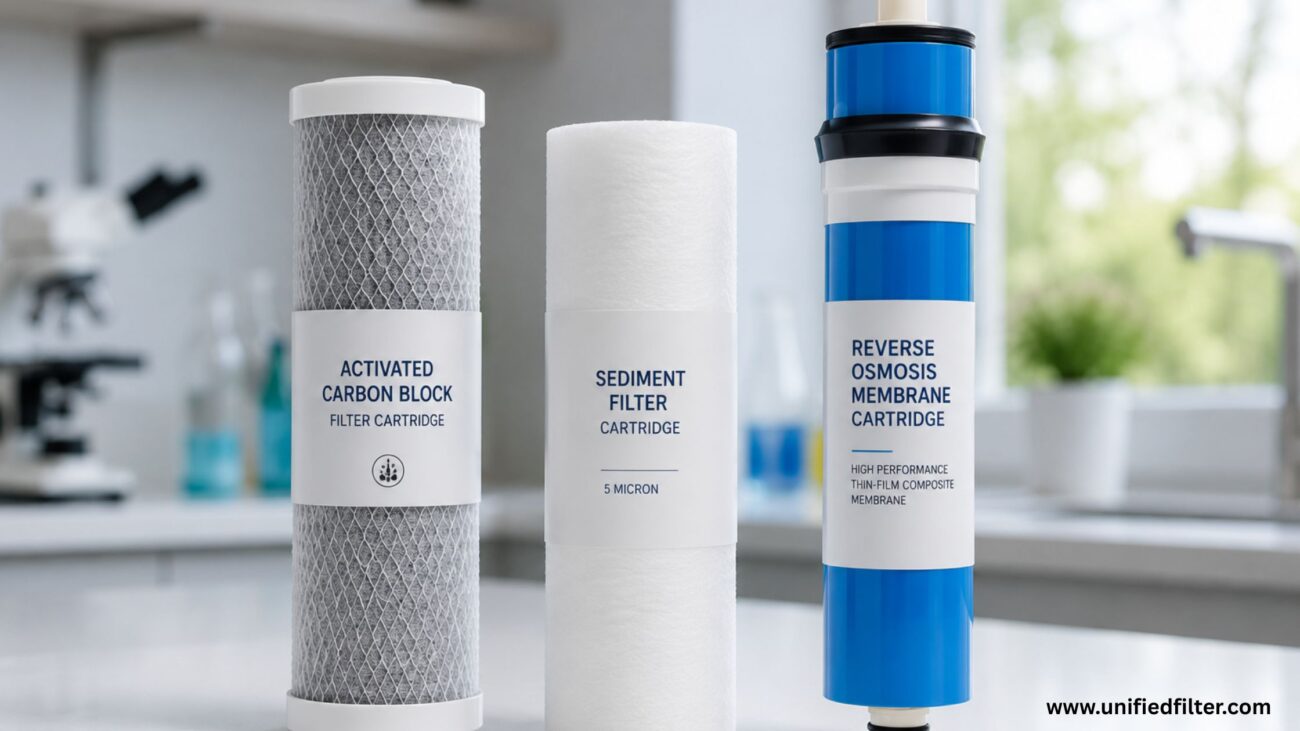
Buying the wrong cartridge is the most common mistake. Here is how to get it right every time:
For fridge filters: check the label on your installed filter, the part number is printed on it. For Samsung: DA97-17376B or DA29-00020B. For Whirlpool/KitchenAid/Maytag: EDR1RXD1 through EDR5RXD1. For Westinghouse: WFCB, WF2CB, or WF1CB.
For under sink systems: check the housing size (10 inch or 20 inch) and the micron rating specified for your system. Match the media type to your water concern, carbon block for taste/chlorine/lead, sediment for particulates.
For whole house systems: check your system manual for the cartridge specifications. Tank-based systems (like SpringWell CF1) use long-life media and do not need frequent cartridge changes, cartridge-based systems (like iSpring WGB32B) need replacement every 6-12 months.
NSF certification: always verify the certification at nsf.org. A cartridge claiming NSF certification should have a verifiable certification number, not just a logo.
FAQs
What is a water filter cartridge?
The replaceable filtration element inside a filter system, the part that actually removes contaminants. The housing just holds it in place.
How often should I replace a water filter cartridge?
Fridge cartridges every 6 months. Pitcher cartridges every 2 months. Under sink carbon every 6-12 months. RO membranes every 2 years. Sediment pre-filters every 3-6 months.
What is the difference between a carbon block and GAC cartridge?
Carbon block is compressed carbon, higher density, better contaminant removal including lead. GAC is loose granular carbon, lower density, better for taste and odor but not lead removal.
Can I use a generic water filter cartridge instead of OEM?
For fridge filters, only use OEM if under warranty. For under sink systems, compatible NSF-certified cartridges are generally acceptable if the micron rating and size match.
How do I know if my water filter cartridge is expired?
Slow flow rate, off taste or smell, red indicator light, or simply 6 months since the last replacement, any of these means it is time to change.