

Blog
RO Filter | What It Actually Does, What It Costs, and Whether You Need One

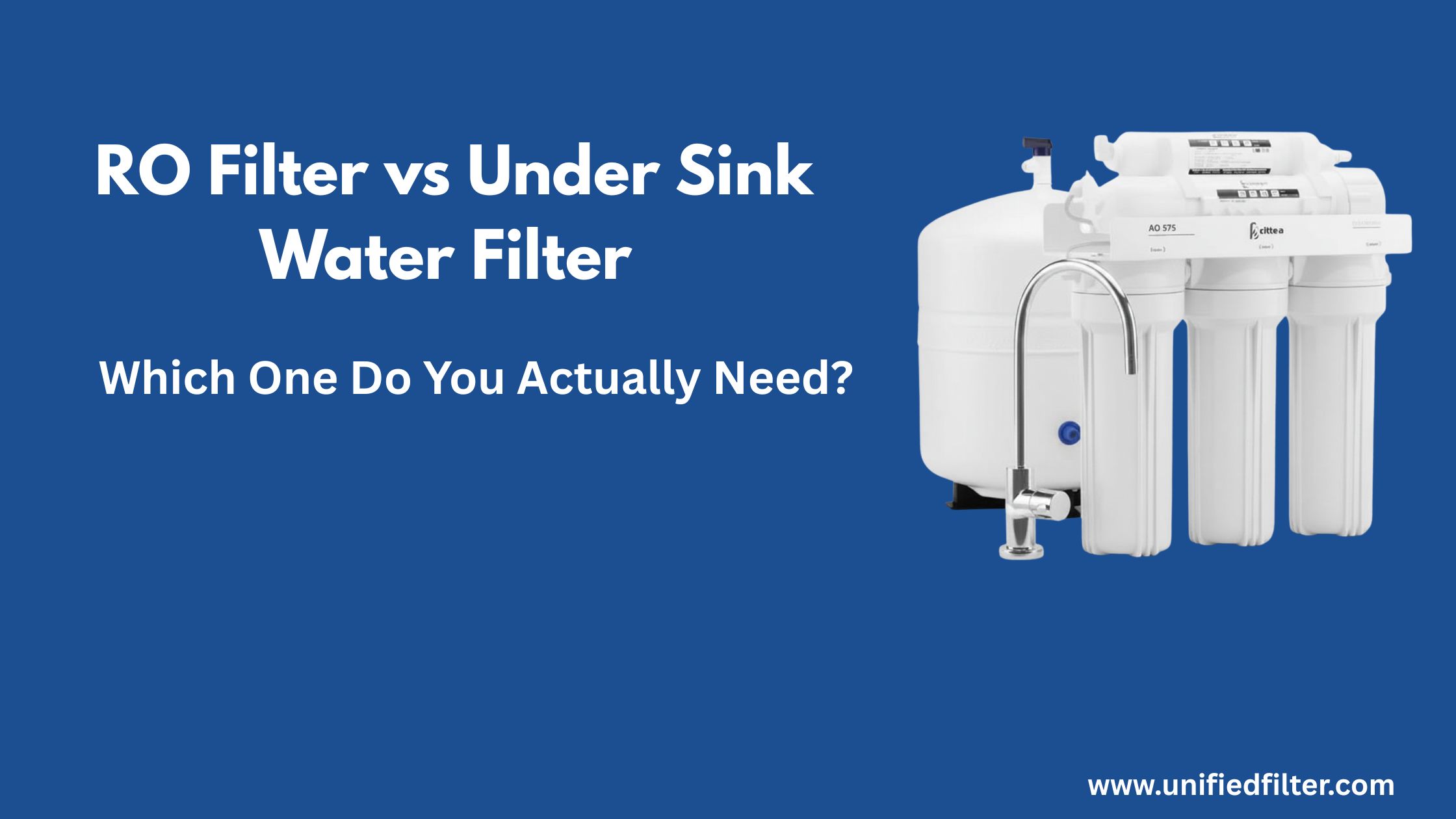
Here is the first thing most people get wrong about RO filters. They think removing everything from water is a good thing. It is not, not entirely. Reverse osmosis does remove up to 99% of dissolved solids, including contaminants you absolutely want gone. But it also strips out calcium, magnesium, and other minerals your body actually needs.
That is not a deal-breaker, most modern RO systems include a remineralization filter that adds them back. But it is the kind of detail that separates a good purchase from an expensive regret.
This guide is for people who want a straight answer. Not a product recommendation list, an honest explanation of what an RO filter is, when it makes sense, and when you are better off with something simpler and cheaper.
What Is an RO Filter and How Does It Work?
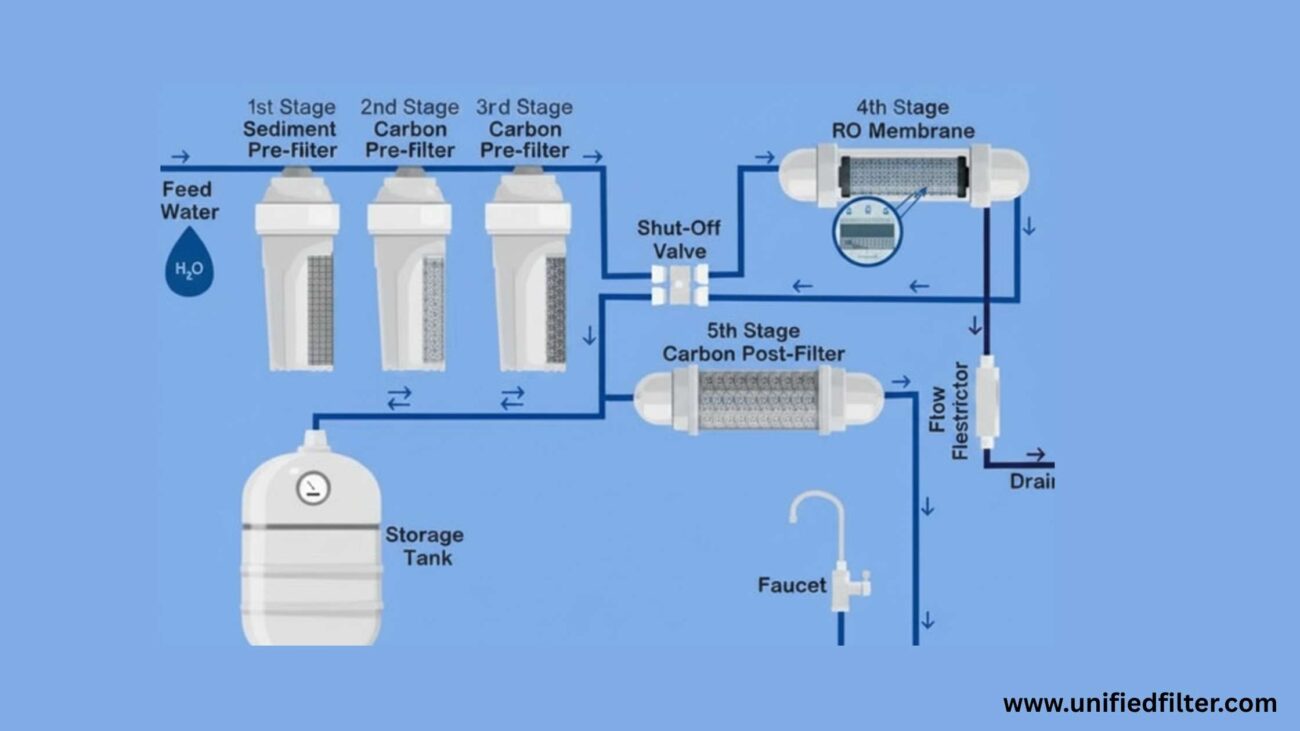
Reverse osmosis is a water purification process that forces water through a semi-permeable membrane under pressure. The membrane has pores so small that most dissolved solids, chemicals, and pathogens cannot pass through. What comes out the other side is very close to pure water.
A standard RO system has three to seven stages. The first stages use sediment and carbon pre-filters to remove larger particles and protect the membrane. The membrane stage does the heavy lifting. A final post-filter polishes the water for taste before it reaches your tap.
The whole process is slow. A tank-based RO system might produce 50-75 gallons per day compared to the instant flow of a regular tap. That is why most systems include a storage tank. The filter runs continuously and stores clean water so it is ready when you need it. Newer tankless systems filter on demand and are faster, but cost more.
One thing most people do not realize is RO systems produce wastewater. For every gallon of purified water, older systems waste 3-5 gallons. Modern tankless systems have improved this significantly, many now achieve a 1:1 or 3:1 pure-to-waste ratio.
What Are the Different Types of RO Filters?
Not all RO systems work the same way. The type you choose affects installation, cost, flow rate, and how much counter or cabinet space it takes up.
| Type | How It Works | Best For | Price Range |
| Tank-based under sink | Filters slowly, stores in tank | Budget buyers, steady use | $150 – $300 |
| Tankless under sink | Filters on demand, no storage | High usage, space-saving | $300 – $600 |
| Countertop RO | Sits on counter, no plumbing | Renters, small kitchens | $200 – $500 |
| Whole house RO | Treats all water entering home | Well water, extreme contamination | $1,000 – $5,000+ |
For most households on city water a tankless under sink RO system is the sweet spot. It saves cabinet space, produces water on demand, and the better models (like the Waterdrop G3 P800 or APEC ROES-50) are NSF certified and well-tested. If you rent and cannot install anything permanent , a countertop RO system is your only real option.
RO Filter vs Under Sink Water Filter | Which One Do You Actually Need?
This is the question most people should be asking before they spend $400 on an RO system. The honest answer is that most city water households do not need reverse osmosis. A good under sink carbon filter certified to NSF 42, 53, and 401 removes chlorine, lead, cysts, pharmaceuticals, and BPA. It costs less, wastes no water, flows at full tap pressure, and keeps minerals in your water.
Where RO genuinely wins: well water with high TDS or nitrates, confirmed PFAS contamination, fluoride removal, or any situation where you need near-pure water and a carbon filter just will not cut it.
| Factor | RO System | Under Sink Carbon Filter |
| Contaminants removed | 99%+ TDS, PFAS, fluoride, nitrates, heavy metals | Chlorine, lead, cysts, VOCs, select PFAS |
| Flow rate | Slower, fills a tank or flows on demand | Full flow, instant at tap |
| Water waste | 1-4 gallons wasted per gallon filtered | Zero waste |
| Upfront cost | $200 – $600 | $150 – $400 |
| Annual filter cost | $75 – $145 | $80 – $320 |
| Installation | Moderate, under sink + dedicated faucet | Easy, connects to cold water line |
| Removes minerals? | Yes, remineralization filter needed | No, minerals stay in water |
| Best for | Well water, PFAS, high TDS, nitrates | City water, chlorine, lead, taste/odor |
If your concern is chlorine, lead, or taste, save your money and get an under sink carbon filter. RO is for the situations where that is not enough.
Who Actually Needs an RO Filter and Who Doesn’t?
The marketing around RO systems makes everyone feel like they need one. Most people do not. Use this as your honest guide:
| Situation | Need RO? | Better Option If Not |
| Well water with high TDS or nitrates | Yes | |
| Confirmed PFAS contamination | Yes | |
| City water, chlorine + taste concern | No | Under sink carbon or fridge filter |
| Lead concern from old pipes | Not necessarily | NSF 53 certified fridge or under sink filter |
| Renter, no plumbing changes allowed | Countertop RO only | Pitcher or countertop carbon filter |
| Fluoride removal needed | Yes | |
| General healthy household, city water | Probably not | Fridge filter covers most needs |
If you already own a Whirlpool, KitchenAid, or Maytag refrigerator your built-in EveryDrop fridge filter covers the most common household concerns: lead, chlorine, cysts, pharmaceuticals, and BPA. For most families on city water, that is genuinely enough. An RO system on top of that is not an upgrade, it is redundancy.
What Does an RO Filter Actually Cost Over Time?
Upfront price is the number people see. Annual cost is the number that matters. Here is what ro filter ownership actually looks like over three years:
- Budget tank-based (e.g. APEC ROES-50): $200-$250 upfront. ~$80/year in filters. 3-year cost: roughly $440.
- Mid-range tankless (e.g. Waterdrop G3 P800): $300-$400 upfront. ~$145/year in filters. 3-year cost: roughly $735.
- Premium smart system (e.g. Cloud RO): $550-$600 upfront. ~$100-$130/year in filters. 3-year cost: roughly $940.
- Countertop (e.g. AquaTru Carafe): $350-$450 upfront. ~$80-$100/year in filters. 3-year cost: roughly $690.
For comparison a genuine EveryDrop fridge filter costs $45-$55 per replacement, twice a year. That is $90-$110 annually, $270-$330 over three years. Zero installation cost. Zero water waste. And 24 NSF-certified contaminants covered. For city water drinking and ice, the math is hard to argue with.
Before buying an RO system, test your water. EPA-certified labs like SimpleLab or National Testing Laboratories will tell you exactly what is in your tap water and whether an RO system is actually necessary for your situation.
What Does an RO Filter NOT Remove?
RO is incredibly effective but it is not magic. Here is what it does not remove:
- Dissolved gases: Radon, hydrogen sulfide, and some VOCs pass through the membrane
- Pesticides and herbicides: Certain small molecules can pass through without additional carbon pre-filtration
- Chloramines: The disinfectant increasingly used instead of chlorine by many city water systems. Carbon pre-filtration handles this, but the RO membrane alone does not
- Bacteria in some countertop systems: Unless the unit includes a UV sterilization stage
This is not a reason to avoid RO, it is a reason to buy a multi-stage system that pairs the RO membrane with quality carbon pre-filters and, ideally, a UV stage. The best systems already do this. The budget systems sometimes do not.
What If You Don’t Need RO | Is an Under Sink Filter Worth It?
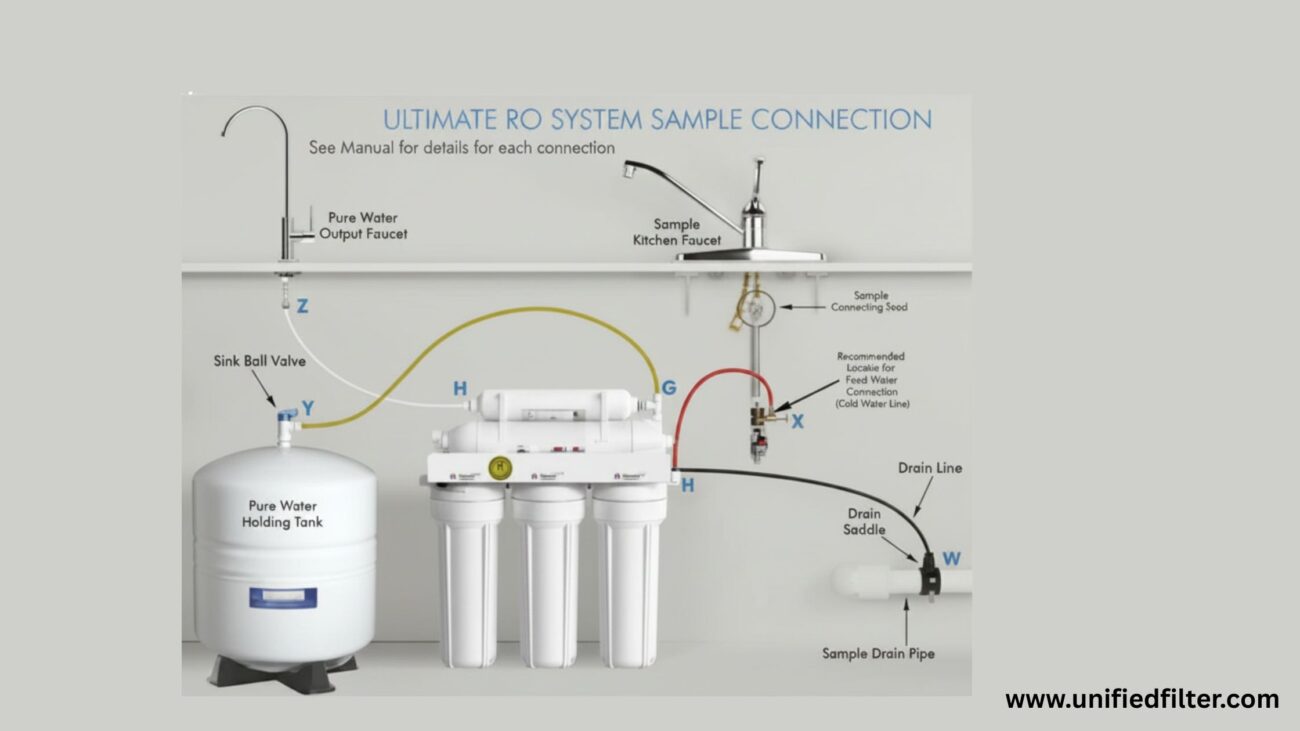
For most city water households, an under sink water filter system is the better answer. It installs under your kitchen counter, connects to the cold water line, and delivers filtered water continuously at full tap pressure. No tank. No water waste. No waiting.
A quality under sink carbon block filter certified to NSF 42, 53, and 401 removes chlorine, chloramines, lead, cysts, pharmaceuticals, BPA, and many VOCs. Installation takes about 30-60 minutes and requires basic plumbing confidence. Most homeowners can do it themselves.
What you give up compared to RO, fluoride removal, TDS reduction, and nitrate removal. If none of those are concerns in your water supply, you are paying for RO capability you will never use. The under sink carbon filter is the right tool for the job for the majority of American households.
Quality under sink options to consider:
iSpring CU-A4, Waterdrop WD-FC-01, Frizzlife MK99. All are NSF certified, all install under the sink, all deliver clean water without wasting a drop. Annual filter costs run $80-$150 less than most RO systems.
Frequently Asked Questions
What does an RO filter remove?
Up to 99% of TDS including PFAS, fluoride, nitrates, heavy metals, bacteria, and dissolved solids, more than any other home filtration method.
Is an RO filter worth it for city water?
Usually not, A certified under sink carbon filter or fridge filter handles chlorine, lead, and most common city water concerns without the cost and water waste.
How much does an RO system cost?
$200-$600 upfront depending on type, plus $75-$145 annually in filter replacements.
Does RO remove PFAS?
Yes, NSF/ANSI 58 or P473 certified RO systems remove PFAS compounds effectively.
Does RO remove fluoride?
Yes, Reverse osmosis is one of the few home filtration methods that removes fluoride.
What is the difference between RO and under sink water filters?
RO removes nearly everything including minerals and fluoride. Under sink carbon filters remove chlorine, lead, and most organic contaminants while keeping beneficial minerals.
Do I need to test my water before buying an RO system?
Yes,Water testing tells you exactly what is in your supply and whether RO is actually necessary for your situation.
What is a tankless RO system?
A tankless RO system filters water on demand instead of storing it in a tank, faster flow, less space, but costs more upfront.
Already Have a Whirlpool-Family Fridge? You Might Not Need an RO System at All.
If you own a Whirlpool, KitchenAid, Maytag, Amana, Jenn-Air, or Kenmore refrigerator. A genuine EveryDrop fridge filter reduces 24 NSF-certified contaminants including lead, chlorine, cysts, and pharmaceuticals. For the vast majority of city water households, that covers your drinking water needs completely.